

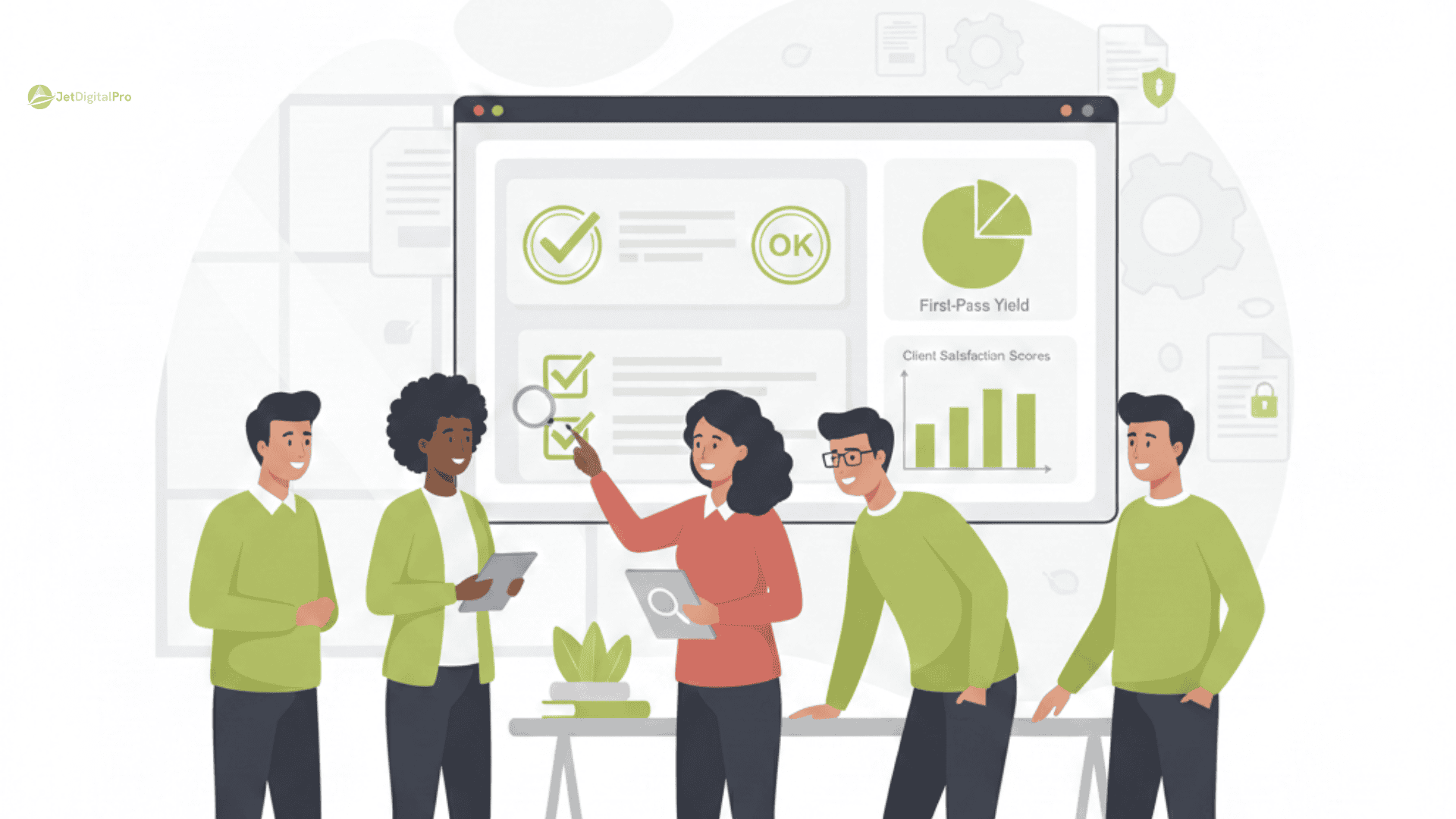
Learn how to build a reliable agency quality control (QC) process that saves time, prevents mistakes, and wins client trust.
This is the brief on building a reliable agency quality control process. A solid QC process isn’t just bureaucracy—it prevents costly rework, reduces reviewer fatigue, and builds long-term client trust.
We write SEO articles that rank on Google — so you can focus on your business.
See Writing Plans →First, standardize what quality means. Agencies need clear, measurable standards, such as readability scores for content or specific hex codes for design, all documented in the project brief. Using SOPs and clear checklists removes guesswork and ensures consistency.
Second, implement a multi-stage review system. The process involves three stages: the creator does a self-check, a peer reviews for logic, flow, and audience impact, and finally, the QC lead performs a technical and compliance audit. This team effort ensures nothing slips through the cracks.
Finally, start small and track ROI. Begin with one repeatable service and a simple five-point checklist. Monitor success metrics such as fewer client revisions, higher first-pass approval rates, and reduced internal rework. Even a 20% reduction in revisions proves this system works.
Ultimately, a reliable QC process makes high-quality work routine, protects creativity, and keeps clients happy every day.
Youneed a quality control process agency because your reputation depends on it. We learned this the hard way after a single typo in a major client’s campaign headline went live. The process isn’t about bureaucracy, it’s about building a reliable system that catches errors, ensures brand consistency, and delivers what you promised, every single time.
It’s the difference between a one-project client and a lifelong partner. What follows is a practical blueprint, built from our own stumbles and successes, to help you implement a QC system that scales with your ambition. Keep reading to protect your work and your relationships.
Quality Control Process Agency Essentials
- A documented QC workflow prevents costly client-facing errors and scope creep.
- Clear roles and regular training turn quality from a chore into a shared responsibility.
- Data from audits and client feedback fuels continuous improvement and proves your value.
What Is a Quality Control Process in an Agency?
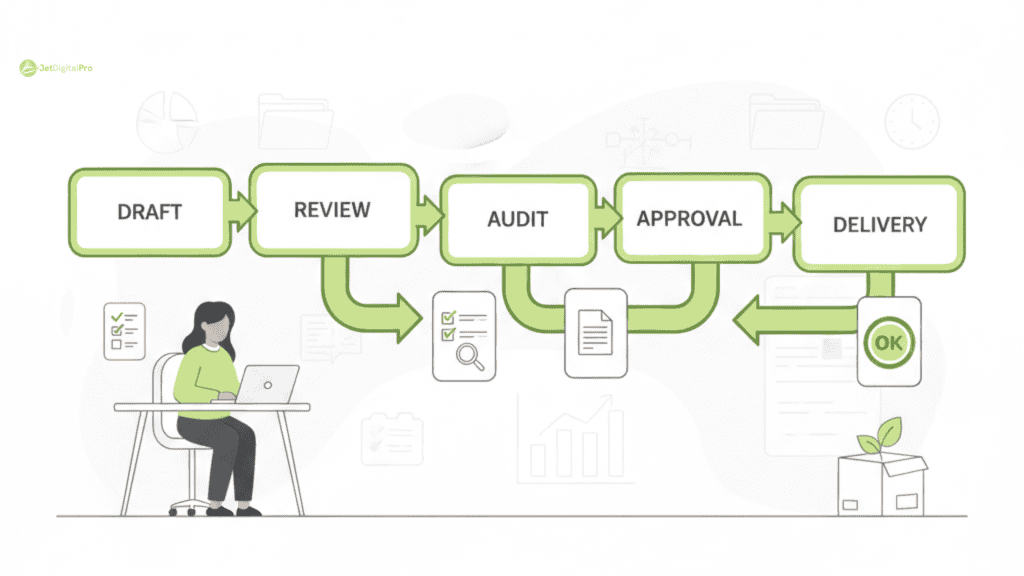
In an agency, the quality control process is the systematic method we use to verify that every deliverable, be it a website, an ad campaign, or a content strategy process, meets predefined standards before it leaves our hands.
This process confirms accuracy, ensures brand guidelines are followed, and aligns the work with both the creative brief and the client’s business goals. Think of it as a safety net for your creativity and your client’s investment.
Why Agencies Need a Structured Quality Control Process
We operate in a high-stakes, fast-paced environment where a missed detail can undermine months of work. A structured QC process is our defense against that. It transforms quality from a hopeful outcome into a predictable result. This system directly tackles client anxiety about consistency and value.
Need SEO content that actually ranks? We write data-driven articles designed to bring organic traffic to your site.
See Our SEO Writing Plans →It reduces costly, morale-killing rework by catching issues internally. Perhaps most importantly, it builds immense trust. When a client knows that every piece of work undergoes a rigorous check, they worry less about micromanaging and more about the big picture. This reliability becomes a core part of your agency’s brand.
Core Steps in an Effective Quality Control Process Agency Workflow
A functional agency QC process isn’t a single action, it’s a rhythm. It starts before the work even begins and continues after delivery. Here’s the core sequence we follow:
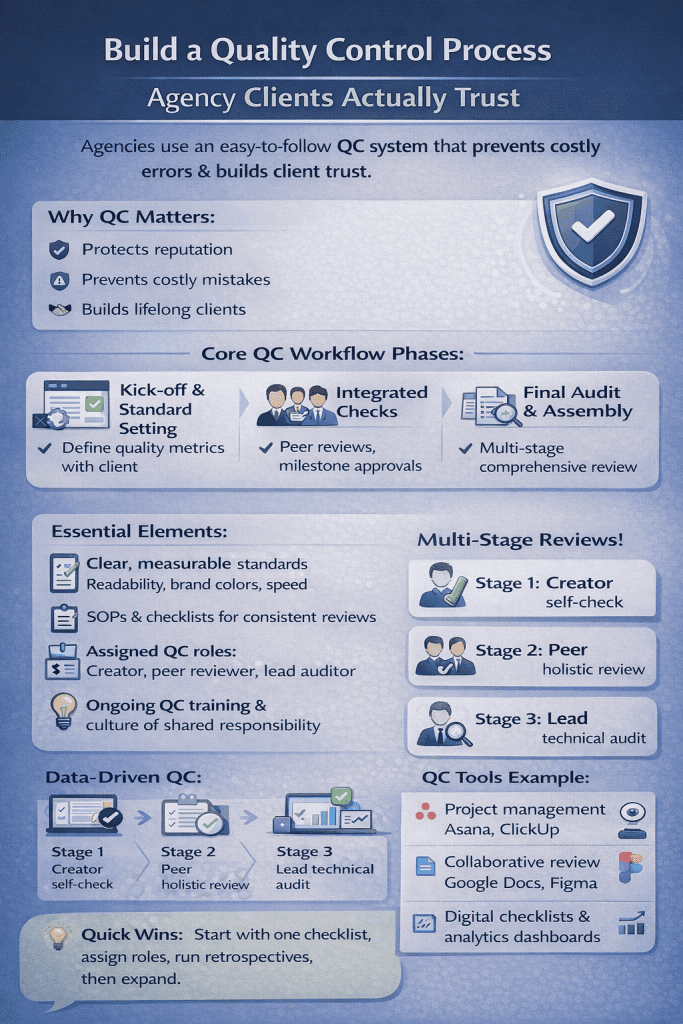
- Kick-off & Standard Setting: Every project starts by defining what “quality” means for this specific deliverable with the client.
- Integrated Checks: Quality reviews are scheduled at natural milestones (e.g., after copy draft, before design handoff).
- Final Audit & Assembly: A comprehensive review ensures all components work together seamlessly.
- Client Delivery & Feedback Loop: We deliver with context and systematically gather feedback to improve the next cycle.
| Phase | Primary Goal | Key Activity |
| Pre-Production | Alignment | Define QC metrics and checkpoints in the project plan. |
| Production | Prevention | Conduct peer reviews and milestone approvals using checklists. |
| Pre-Delivery | Verification | Perform a final multi-stage audit against all standards. |
| Post-Delivery | Improvement | Analyze client feedback and project data for process updates. |
Setting Clear Quality Standards and Metrics
You can’t control what you haven’t defined. For every project, we establish clear, measurable quality standards upfront. This goes beyond “make it good.” For content, it might be a target readability score and keyword inclusion. For design, it’s specific hex codes and font-size hierarchies.
For development, it’s page load speed and cross-browser compatibility. We document these in the project brief so everyone, from the strategist to the intern, knows the exact benchmarks for success. This eliminates subjective debates and sets a clear finish line.
Documenting SOPs and Checklists for Consistency
When deadlines loom, consistency is the first casualty. That’s why we rely on documented Standard Operating Procedures (SOPs) and checklists. An SOP for “Client Content Deliverable Review” outlines every step, from checking the brief alignment to verifying meta descriptions.
The accompanying checklist turns that procedure into a foolproof action list. This documentation ensures that whether the work is done on a Tuesday or a Friday, by a senior or a junior team member, the quality bar remains the same. It’s how we bake our agency’s standards into our daily workflow.
Assigning Roles and Responsibilities in QC Reviews
A vague “someone should check this” guarantee leads to failure. We assign specific QC roles for every project stage. The creator does an initial self-check. A dedicated peer from a different team provides a fresh perspective.
Finally, a project lead or dedicated QC manager conducts the final compliance audit before the client approval process begins. This clear chain of responsibility prevents tasks from falling through the cracks. It also distributes the quality burden, making it a team ethos rather than a last-minute panic on one person’s desk.
Training Teams to Maintain Quality at Scale
A checklist is useless if the team doesn’t know how to use it. We invest in ongoing QC training. This isn’t a one-day seminar. It’s regular micro-sessions on using new tools, interpreting updated brand guidelines, or learning from a recent “catch” that saved a project.
“When different teams work together, mistakes can happen, ideas could be miscommunicated and some feedback can get lost. However, with a quality control process in place, lapses will be easily spotted and rectified.” – Anakle Blog
We train people not just on the “what” of the checks, but the “why.” When a copywriter understands how a specific headline structure impacts conversion, they become a partner in quality, not just a rule-follower. This builds a culture where everyone owns the outcome.
Inspection, Audits, and Multi-Stage Reviews
Our inspection system is multi-layered. Think of it as a filter with progressively finer mesh.
- Stage 1 (Creator): Basic compliance with the brief and internal style guides.
- Stage 2 (Peer): A holistic review for logic, flow, and audience impact.
- Stage 3 (Lead/QC Specialist): A technical and compliance audit against all documented standards.
This staged approach is efficient. It catches major conceptual issues early (Stage 2) and saves granular technical checks for the end (Stage 3), preventing wasted effort on work that might need a fundamental rethink.
Using Data Analysis to Detect Quality Gaps
We move beyond “feeling” like quality is good. We track it. For instance, we might use a simple control chart to track the number of revisions per project type. If website copy consistently requires more revision rounds than blog content, that’s a data point. It signals a gap in our briefing process or writer training for that service line.
We analyze client feedback scores, common error categories from our checklists, and project turnaround times. This data tells us exactly where our process is leaking, so we can fix it with precision, not guesswork.
Corrective Actions and Continuous Improvement Loops
When a quality issue slips through, our first question is “Why did our process allow this?” not “Who messed up?” We initiate a corrective action loop. The team discusses the root cause, was the checklist item unclear? Was the reviewer rushed? We then update our SOP, checklist, or training to prevent a repeat.
This loop is formalized in monthly review meetings. It turns failures into the fuel for a stronger system. This mindset of continuous improvement ensures our QC process evolves faster than our clients’ expectations.
Key Tools That Streamline Agency Quality Control
The right tools prevent QC from becoming a logistical nightmare. We use a combination:
- Project Management Platforms (e.g., Asana, ClickUp): To assign QC tasks, set review deadlines, and hold people accountable.
- Collaborative Review Tools (e.g., Figma, Google Docs): For leaving contextual, trackable feedback directly on assets.
- Digital Checklist Apps: To replace paper lists with mobile-friendly, version-controlled checklists that log completion.
- Analytics Dashboards: To visualize quality metrics like first-pass yield and revision rates.
For our seo agency content creation, a structured editorial calendar and a clear briefing template are indispensable tools. At Jet Digital Pro, we’ve built our entire white-label content service around this toolstack, ensuring every article undergoes a documented, multi-person review flow before it ever reaches our agency partners.
Adapting Quality Control for Creative and Service Workflows
QC in a creative agency can’t stifle the spark. We adapt. For a design sprint, the “standards” might be mood board alignment and user persona relevance. The “checklist” includes questions like, “Does this visual hierarchy guide the eye correctly?”
For a strategic service like SEO, our audits check for technical crawlability, content depth, and backlink profile health against the plan. The principle remains, define the standard, check against it, but the application flexes to fit the work. The goal is to safeguard creativity, not sanitize it.
Common Challenges in Agency QC (Speed vs. Quality)
The eternal agency tension. “We don’t have time for a full QC cycle!” is a common cry. The truth is, you don’t have time not to. The challenge isn’t the process, it’s perception. The solution is integrating QC into the timeline from the start, not adding it at the end. Another challenge is reviewer fatigue.
“Although some may mistake it as a waste of time, comprehensive quality testing and vetting early in the campaign development process can save you considerable time (not to mention hassle and money) down the line.” – Lucid Advertising Blog
Using a rotating schedule for peer reviews and keeping checklists concise combats this. The key is to design a process that respects deadlines without sacrificing the safeguards that protect those deadlines from disaster.
Practical Solutions to Strengthen Your Quality Control Process Agency
Start small, but start. Don’t try to build a perfect system overnight.
- Pick one repeatable service (e.g., blog post delivery) and build a simple 5-point checklist for it.
- Assign the roles clearly for one project.
- Run a retrospective after that project. What did the checklist catch? What did it miss?
- Tweak and expand from there to other services.
Automate what you can. Use template briefs, automated grammar checks, and scheduled audit reminders. The strongest solution is committing to the habit of review, even when it’s inconvenient.
Measuring Success and Proving QC ROI
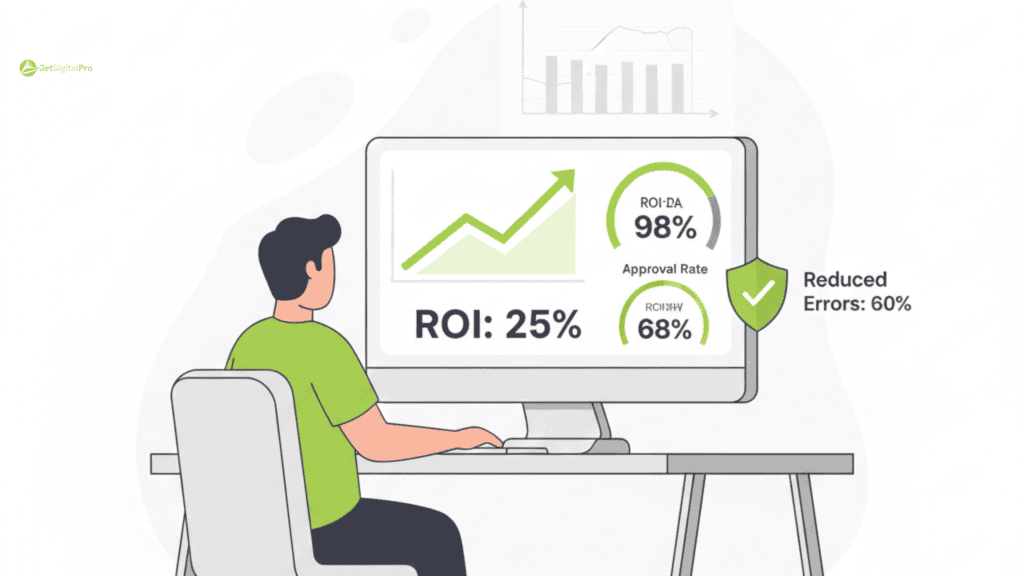
The return on investment for a QC process is tangible. Track these metrics:
- Reduction in Client Revisions: Fewer rounds of feedback mean higher profitability.
- Increase in First-Pass Approval Rate: Work accepted immediately is a direct efficiency gain.
- Client Retention & Satisfaction Scores: High-quality, consistent delivery is why clients stay.
- Internal Rework Time: Measure hours saved by catching errors early versus fixing them later.
Show your team and your clients the data. A 20% reduction in revision cycles isn’t just a nice stat, it’s proof that the system creates more time for innovation and less time for damage control.
FAQ
How do third-party agencies ensure my products meet global quality standards?
Third-party agencies act as an objective eye, performing product inspections and compliance audits to verify that your goods align with ISO standards.
By implementing non-conformance workflows, they catch quality issues early in the manufacturing process. This independent oversight maintains brand integrity and ensures that every content piece or physical item meets specific regulatory requirements before shipment.
What role does First Article Inspection play in maintaining brand integrity?
A First Article Inspection occurs during the initial production run to verify that raw materials and manufacturing technologies match your specifications. This step is vital for creative direction, ensuring brand colours and creative messaging are consistent.
By catching deviations early, QA professionals help you avoid costly errors, protecting customer satisfaction and meeting high consumer expectations in competitive consumer markets.
How can a quality control chart like the X-bar Chart improve my yield?
A quality control chart, specifically an X-bar Chart, allows the QC department to track process control over time. By monitoring variables, you can improve your First Pass Yield and implement predictive defect prevention.
Using the Taguchi Method alongside these tools helps minimize variance, ensuring manufacturing excellence and reducing the need for manual QC through data-driven product monitoring.
Which regulatory requirements and codes apply to large-scale infrastructure projects?
For structural projects, agencies must adhere to the International Building Code® and the City of Los Angeles Building Code. Code officials verify regulatory compliance through rigorous Quality Control Inspections Services.
This process includes reviewing CMM data and ensuring Material Sampling follows ANSI/ASQC Z1.4 guidelines, providing product assurance for everything from stucco application to complex mechanical installations.
Your Next Step for Flawless Delivery
A reliable quality control process turns your agency’s promise of quality into a daily routine. It’s what lets you grow without letting your standards slip. Pick one project and one checklist to start. The discipline of checking your work protects your reputation and builds lasting client trust.
Ready to build a system that guarantees quality? Let’s talk about your workflow.
References
- https://anakle.com/quality-control-process-in-a-creative-agency-meaning-and-tips-for-effectiveness/
- https://www.lucidadvertising.com/quality-control-digital-marketing/
Related Articles
- https://jetdigitalpro.com/seo-agency-content-creation-process/
- https://jetdigitalpro.com/client-approval-process-agency/
- https://jetdigitalpro.com/content-strategy-process-agency/
Stop Guessing. Start Ranking.
Get a free sample article written for your niche. See the quality before you commit.
Get Your Free Sample Article →No credit card needed • 100% tailored to your niche