


Learn why SEO agency pricing varies so dramatically, what drives costs, the most common pricing models, and how to choose the right SEO partner for sustainable business growth.
Welcome to this explainer. Let me ask you a question. Have you ever been sitting at your desk staring at your screen with three different SEO proposals open and wondering why one agency charges $1,000, another charges $5,000, and a third wants $15,000 or more per month? The confusing part is that they often seem to promise the exact same results. If you’ve ever felt overwhelmed comparing SEO proposals, you’re definitely not alone.
We write SEO articles that rank on Google — so you can focus on your business.
See Writing Plans →Today we’re breaking down the real cost of SEO agency pricing so you can understand exactly what you’re paying for. We’ll uncover why SEO quotes vary so widely, explore the most common pricing models, examine the factors that drive costs, review typical pricing tiers, and finish with practical advice for choosing the right SEO partner.
The first thing to understand is that SEO pricing is not random. Agencies don’t simply pull numbers out of a hat. Pricing is typically based on a combination of labor, specialized tools, experience, expertise, and the level of competition within your industry. Once you understand these variables, agency proposals begin to make much more sense.
Most SEO agencies use one of three core pricing models. The most common is the monthly retainer, where you pay a fixed amount each month in exchange for ongoing SEO services and continuous optimization efforts. This model is often the best fit for businesses seeking long-term growth because SEO requires consistent work over time.
The second model is project-based pricing. This approach is commonly used for one-time deliverables such as SEO audits, website migrations, technical SEO cleanups, or strategy development projects. You pay a flat fee for a defined scope of work, and once the project is completed, the engagement ends.
The third model is hourly consulting. Agencies or consultants bill based on the time spent working on your project. While this can work well for consultations, training, or small tasks, it can become difficult to predict costs over a longer period, making it less suitable for comprehensive SEO campaigns.
So what actually drives SEO costs higher or lower? One major factor is agency experience. Agencies with proven systems, extensive case studies, senior specialists, and a strong track record often command premium pricing. Their expertise can reduce risk and improve the likelihood of achieving meaningful results.
Your website and industry also play a significant role. Consider the difference between a local plumbing company and a nationwide ecommerce retailer. A local business may only need to compete within a specific geographic area, while a large ecommerce store may face intense competition across thousands of keywords. Naturally, the resources required for each campaign are dramatically different.
The scope of work is another major cost driver. Campaigns that require extensive content creation, technical SEO improvements, conversion-focused landing pages, and aggressive link-building efforts will require significantly more time and expertise. As the workload increases, so does the cost.
Content creation alone can have a substantial impact on pricing. A basic blog post may be relatively inexpensive, but a highly researched article written by a subject matter expert can cost several times more. Similarly, technical audits, conversion optimization projects, and advanced SEO implementations often require specialists whose services come at a premium.
When agencies package these services together, they generally create different pricing tiers. Entry-level SEO packages typically range from approximately $1,000 to $2,500 per month. These packages usually focus on maintenance activities, basic optimizations, and limited strategic planning. They help keep a website moving forward but may not provide aggressive growth.
Mid-tier SEO packages often range from roughly $2,500 to $7,000 per month. At this level, businesses usually receive a dedicated account manager, ongoing content production, active technical SEO work, link building, and a more comprehensive growth strategy. This is often where meaningful SEO momentum begins to develop.
Premium SEO services commonly start at $10,000 per month and can increase significantly depending on the size of the organization and the competitiveness of the market. These campaigns are highly customized and frequently involve senior strategists, specialized experts, enterprise-level reporting, and sophisticated growth initiatives designed for highly competitive industries.
When it comes time to choose an SEO agency, focusing solely on price is often a mistake. The cheapest proposal may not provide the expertise or resources needed to achieve your goals. Instead, evaluate what is actually included within each proposal and whether those deliverables align with your business objectives.
Need SEO content that actually ranks? We write data-driven articles designed to bring organic traffic to your site.
See Our SEO Writing Plans →Before signing a contract, ask four important questions. First, what specific deliverables are included each month? Second, who will actually perform the work on your account? Third, how will success be measured and reported? And fourth, are all timelines, responsibilities, and costs clearly documented within the agreement?
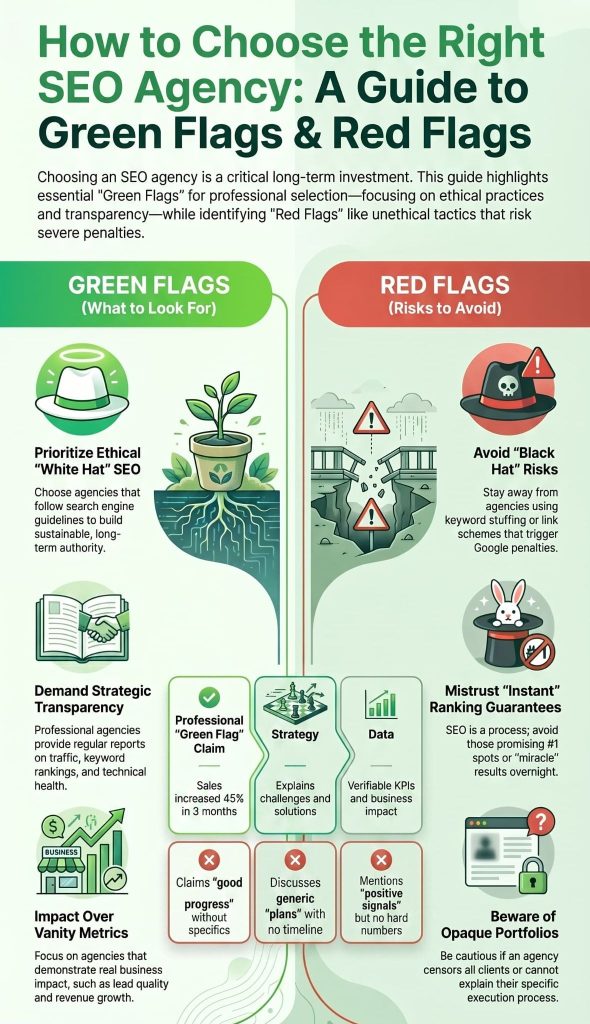
It’s also important to watch for red flags. Be extremely cautious of agencies that guarantee a number-one ranking on Google, because no agency controls search engine algorithms. Similarly, be wary of companies pushing long-term contracts without proving value first. Vague proposals filled with jargon but lacking clear explanations should also raise concerns.
The most important mindset shift is recognizing that you’re not buying SEO tasks. You’re investing in business growth. Effective SEO is about attracting qualified visitors, generating leads, increasing revenue, and building a sustainable competitive advantage. The value comes from outcomes, not merely from technical activities.
As you review SEO proposals, ask yourself one final question: does this agency clearly connect its work to measurable business growth? If the answer is no, the proposal may not be the right fit. When you understand the labor, expertise, strategy, and resources behind SEO pricing, comparing agencies becomes much easier and your chances of choosing the right partner increase significantly.
A few months ago, a local B2B software founder showed me three competing SEO quotes. Having negotiated these contracts from both sides, first as a former agency strategist managing over $2M in client retainers, and now as an advisor, I saw how corporate buzzwords hid vastly different tasks.
Three factors dictate agency pricing: labor, tools, and industry risk. Here is exactly what you are paying for.
SEO Agency Pricing: Quick Cost Snapshot
- Most agencies use monthly retainers, but they change the scope and deliverables wildly.
- Your industry and website complexity are primary cost drivers.
- The cheapest quote often omits critical services or relies on junior staff.
How agencies charge you
Agencies use three primary billing models. Their choice reveals exactly how they value your partnership. Monthly retainers offer predictable line-item costs, but the actual deliverables hidden behind that flat fee vary wildly from agency to agency.
For example, a $4,000 monthly fee might cover writing a few blog posts, checking your site for technical problems, and some link-building. This model is for long-term partnerships.
Project fees cover a single job with a clear deadline. You pay a fixed price for a specific result, like building a new website or doing a one-time SEO audit. Agencies must control the project scope to protect their profit margins. It’s good for a specific goal, but not for continuous work.
Hourly billing ties costs directly to time spent, but it naturally penalizes efficient agencies and turns your marketing budget into an unpredictable moving target. Reserve this model for quick consultations rather than full campaigns.
Here’s a quick breakdown:
| Pricing Model | Best For | Advantages | Drawbacks |
| Monthly Retainer | Long-term SEO and content growth | Predictable monthly cost, ongoing optimization, agency prioritization | Requires ongoing commitment |
| Project Fee | One-time SEO audits, website launches, content projects | Fixed budget, clear deliverables, defined timeline | No ongoing optimization after completion |
| Hourly Rate | Consultations and small tasks | Flexible, pay only for time used | Costs can become unpredictable and difficult to forecast |
| Hybrid Model | Businesses needing ongoing support plus special projects | Combines flexibility with long-term strategy | Can be more complex to manage and budget |
What gets lost in the retainer
In my own agency days, we calculated that nearly 40% of a standard retainer was consumed by project management and software overhead before a single content brief was written. Clients rarely saw that breakdown.
Match your billing structure to your immediate goals: use retainers for sustained growth and project fees to patch sudden technical emergencies. Data from Sitechecker’s Agency Pricing Survey highlights why these retainer dynamics shift behind the scenes:
“In my years pitching to clients, I’ve sat on both sides of the table, and these internal pressures are highly visible in the data. According to Sitechecker’s Agency Pricing Survey, 48% of agencies point to intense market competition as their primary pricing barrier, while 37% struggle with client ROI skepticism. When an agency feels that pressure, they tend to underprice their retainer to win your business, which almost always results in them cutting corners on your execution later.” – Sitechecker.pro
What really changes the price?

Agencies calculate your quote using four main factors. Ignoring these details makes it hard to compare a $2,000 proposal to one that costs $20,000.
First, the agency itself. An established firm with a track record charges more, sometimes 30-50% more than a new one. You’re paying for lower risk and better systems. Location still matters, too. An agency in a major city has higher rent and salaries, and that cost gets added to your bill.
Second, your website and industry. A simple local site is cheaper to optimize than a massive online store with thousands of products. Your industry’s competitiveness sets the budget. Trying to rank for “best running shoes” is expensive. Ranking for a specific, long product name costs much less.
Third, the project’s scope. A few blog posts cost less than in-depth, researched articles. Do you need just writing, or the full service with keyword research and technical fixes? A custom plan always costs more than a standard package.
Finally, how you work together. Expecting a live data dashboard instead of a simple email report adds cost. Needing 24/7 support instead of business-hours contact increases the price, too.
Every extra request means more work, more tools, and more expertise. The final price is just the total of all those parts.
What’s in those agency packages?
A lot of agencies sell plans with names like Bronze, Silver, and Gold. These are just pre-set monthly retainers. They try to make a custom service seem simple. Here’s what those levels usually mean for a small or medium business.
The Basic Package ($1,000 – $2,500/mo) has strict limitations. At this price point, you are buying a defensive maintenance plan, not a growth engine. Having managed these budgets, I can tell you that this fee covers automated software licenses (like Semrush or Ahrefs), a couple of basic 800-word articles written by generalist freelancers, and about 3 to 5 hours of manual labor.
To save money on cheap packages, agencies give your account to junior staff. These employees run basic software checklists instead of building a real strategy. It keeps your site stable, but it will not help you leapfrog aggressive competitors.
The middle package. This one ranges from $2,500 to $7,000 monthly. It’s the most popular for businesses that want to grow. You typically get a dedicated contact person, a planned content schedule, more detailed technical SEO work, and actual efforts to build links. The content is better and there’s more of it. This option actively grows your traffic instead of just keeping it alive.
The high-end package. This starts around $10,000 and goes up. You get a fully custom strategy. Experts write your content, and specialized engineers solve your toughest technical bugs. You get advanced reports and can talk directly to the agency’s leaders. This is for companies where search traffic is a major source of sales.
Tier names like ‘Silver’ or ‘Gold’ are completely arbitrary marketing labels. To find the real cost, bypass the title and audit the exact scope: asset counts, word lengths, revision caps, and specific technical milestones.
A quick guide:
- Basic ($1k-$2.5k/mo): Foundational tasks, limited content, simple reports.
- Middle ($2.5k-$7k/mo): Built for growth. Includes a dedicated manager, link building, and basic tracking for AI search engine results.
- High-End ($10k+/mo): Custom plans across all platforms. Senior experts run your account, fix complex code, and optimize your site to show up inside ChatGPT.
Always check what’s not included. Look for setup fees, charges for special software, limits on how many times you can request changes, or extra costs for rush jobs. Hidden fees inflate your invoice by 20%. Honest partners disclose these costs upfront; bad agencies hide them until later.
Paying for content and strategy

Some agencies price their content writing as a separate service. Agencies price content using three standard metrics: a flat rate per article, a per-word fee, or a bundled monthly package. Top agencies charge $150 to $950 per blog post based on research depth, though low-tier freelance marketplaces can drop as low as $80 for basic drafts.
The price depends on length, how much research is needed, and the writer’s skill. A short, 500-word news update will be cheap. A major 2,000-word guide that includes expert interviews and new data will be expensive. Some agencies charge $0.10 to $1.00+ per word for complex industries like healthcare or finance.
Landing page copywriting commands a premium because it directly drives conversion pipelines. Expect flat fees ranging from $1,500 to $4,000+ per page at this level, you are paying for psychological conversion architecture, not just words on a page.
You must also pay for the strategy work before anyone types a single word.
- Keyword research can be a small project for about $400, or a major study with a full plan for over $3,500.
- A technical audit checks your website’s health. Agencies charge an hourly rate of $100 to $300, or a flat project fee between $1,000 and $7,000.
Here are typical price ranges:
- SEO Blog Post: $80 – $950
- Landing Page Copy: $1,500 – $4,000+ per page
- Keyword Research: $400 – $3,500+
- Technical Audit: $1,000 – $7,000 (project)
When you look at prices, don’t just compare the cost of one article. Think about the value. One well-researched post that brings in good customers for $500 is a smarter buy than ten cheap posts that nobody reads. You’re paying for the agency’s plan, their skill in picking the right topics, optimizing the work, and getting it seen. The writing is just the part you end up with.
How to compare agency quotes
You have three agencies you’re considering. Their proposals arrive, one is a fancy PDF, one is a detailed document, one is just a short email with a price. To compare them, you have to make them all answer the same questions.
When you review a proposal, look for line-item transparency. If a quote says “Ongoing Technical Work,” delete it. Good proposals list exact tasks so nobody gets confused. Copy and paste this exact checklist into an email to test your prospective agency before signing:
- ‘What percentage of this monthly retainer goes directly toward content creation and active digital PR versus project management overhead?’
- ‘What are the exact length, revision limits, and sourcing requirements for the content deliverables?’
- ‘Will our technical audit cover advanced governance items like log file analysis and schema implementation, or is it a standard software crawl?’ Agencies that hide these numbers are guessing what you will pay. They are not calculating actual labor costs
Demanding this level of granularity protects your budget from sudden out-of-scope surcharges mid-campaign.
Second, ask about the team. Who is actually doing the work? Are they junior employees or senior experts? What’s their experience? A lower price often means your account is handled by newer staff. That might be fine for your needs, but you should know upfront. Ask for examples of past work or references from clients in your industry. A good agency will have these ready.
Third, check the metrics for success. What numbers will they track to show progress? Is it just surface-level stuff like traditional keyword rank tracking, which is highly fragmented in the era of AI overviews, or is it clear business goals like a 20% lift in pipeline conversion? Their answer shows whether they care about activity or actual results. Agree on these goals before you sign anything. In a recent analysis by 5WPR
“Only 29% of SaaS teams rate their content strategy as highly effective,” and “47% do not measure content ROI at all.” The report notes that “SEO-sourced leads convert at 51% MQL-to-SQL versus 13% for all other channels.” – 5WPR
Watch out for red flags.
- Walk away immediately if an agency guarantees page-one rankings or specific profit margins. No one owns Google’s algorithm, which updates hundreds of times per year without warning.
- Be cautious of very long contracts (two years or more) right from the start. A confident agency will prove its value first.
- Huge discounts for annual upfront payments point to a massive red flag: the agency is running out of cash.
- Most importantly, avoid any agency that won’t put all the details, deliverables, costs, how you’ll communicate, into a clear, written contract. That document protects both of you.
Finally, negotiate. Don’t just haggle over the price. Talk about value. If their quote is $5,000 a month, can they include an extra service for that price? Can they lock in that rate for a year? Could you agree on a lower monthly fee with a bonus if they hit specific targets? Agencies expect to negotiate, especially for longer deals. Your power in the discussion is your business and your potential as a long-term client.
Picking the right agency
Final vetting requires an operational alignment check, not just a spreadsheet comparison. Evaluate how deeply the agency investigated your product during the discovery call and how transparently they answered your toughest structural questions.
You need to trust them and feel like they get what you’re trying to do. The lowest price is often a bad deal if you can’t communicate well or they don’t share your vision. Calculate the total cost of waiting. Consider the true cost of speed:
- Slow Agency: $3,000/mo x 6 months = $18,000 before seeing results.
- Fast Agency: $8,000/mo x 3 months = $24,000 to see results faster.
Measure agency speed against your runway, not just your monthly cash outflow. Plan for growth. Can this agency handle your business as it gets bigger? Do they have the team and the service plans to support you if your sales double or triple? Changing agencies later is a hassle and costs more money. Picking one that can grow with you saves a lot of trouble.
You’re not just buying a service. You’re paying for skill and a plan. The right agency’s price should feel like an investment in your growth, where their success depends on yours. The best proposal isn’t always the cheapest one. It’s the one that shows you, step by step, how spending money with them now will lead to more customers and sales later.
FAQ
How do monthly SEO content packages differ from one agency to another?
Monthly SEO content packages differ in the amount and type of content delivered. One package may include four blog posts per month, while another may include keyword research, content optimization, and performance reporting. Businesses should compare SEO content package tiers, content agency monthly rates, and agency content packages comparison details to understand exactly what services they receive for the monthly fee.
What factors have the biggest impact on SEO content pricing?
SEO content pricing depends on several measurable factors. Content length, topic complexity, research requirements, industry competition, and publishing frequency all affect costs. A 500-word article generally costs less than a 2,000-word article that requires expert research. Reviewing SEO content pricing factors, SEO article writing cost, SEO blog post pricing, and SEO content cost per article helps businesses understand how agencies calculate pricing.
Is a content marketing retainer better than project-based pricing?
A content marketing retainer is often a better option for businesses that publish content consistently throughout the year. Retainer-based SEO pricing provides predictable monthly costs, dedicated production capacity, and ongoing content planning. Content SEO project pricing may be more suitable for businesses that only need occasional content. Comparing content marketing retainer vs project pricing helps determine which model aligns with your publishing schedule and budget.
How can businesses estimate a reasonable SEO content investment?
Businesses can estimate a reasonable SEO content investment by defining their publishing goals and content requirements. For example, publishing eight optimized articles per month requires a larger SEO content budget than publishing two articles. A content marketing pricing guide, SEO content budget planning process, and SEO content investment guide can help businesses calculate a realistic content marketing monthly fee based on their growth objectives.
What should be included in an SEO content retainer agreement?
A content retainer agreement should clearly define the number of articles, content formats, delivery schedules, revision limits, reporting requirements, and payment terms. An SEO content retainer contract should also explain how additional work is billed if content needs exceed the agreed scope. Reviewing SEO writing retainer agreement terms, content writer monthly retainer expectations, and agency retainer content SEO services helps prevent disputes and ensures both parties understand their responsibilities.
Invest in SEO That Delivers Results
SEO agency pricing is not just a cost. It is an investment in the work, expertise, and strategy needed to grow your business. The right package depends on your goals, competition, and growth plans. When you understand what is included, you can choose a partner with confidence and focus on measurable results instead of guesswork.
Choosing an SEO partner shouldn’t feel like a roll of the dice. To bypass opaque agency pitches and execute a transparent, deliverable-backed SEO blueprint that drives predictable pipeline revenue, reach out to JetDigitalPro Contact Us.
You’ll consult directly with a senior strategist who has built these pricing models, not a junior account executive. Bring your most confusing quote.
References
- https://ahrefs.com/blog/seo-pricing/
- https://moz.com/blog/seo-pricing-costs-of-services
Related Article
- https://jetdigitalpro.com/agency-retainer-for-content-seo/
- https://jetdigitalpro.com/compare-pricing-different-agencies/
- https://jetdigitalpro.com/factors-affecting-agency-pricing/
- https://jetdigitalpro.com/getting-quote-from-seo-agency/
Stop Guessing. Start Ranking.
Get a free sample article written for your niche. See the quality before you commit.
Get Your Free Sample Article →No credit card needed • 100% tailored to your niche