

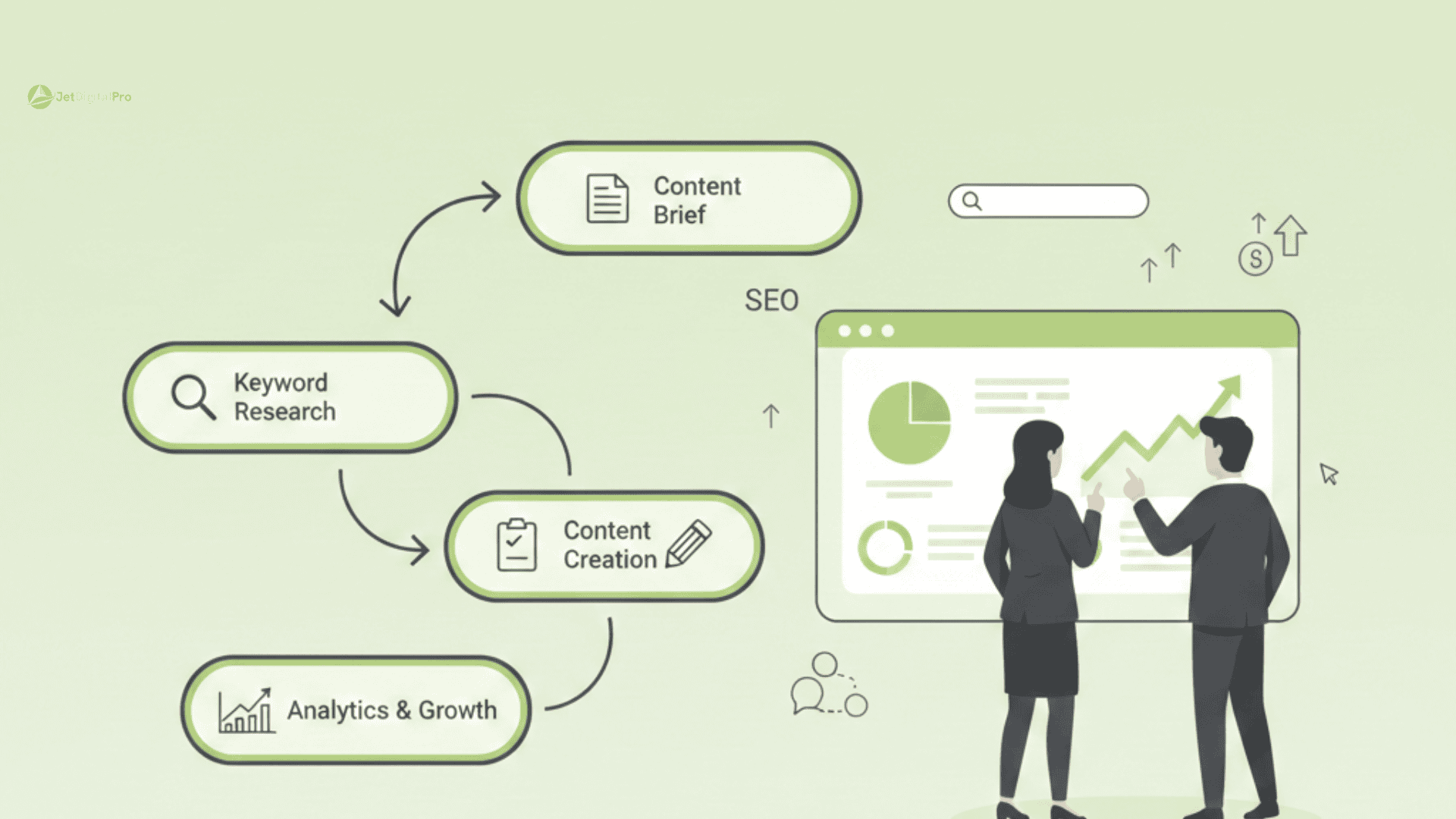
Discover the hidden system behind SEO content that ranks, from content briefs and topic clusters to editing and performance tracking.
This is the brief on the hidden process behind successful SEO content.
We write SEO articles that rank on Google — so you can focus on your business.
See Writing Plans →By SEO, we mean ranking on Google. You are not hiring an agency just to write words, you are investing in a repeatable system that drives real business growth.
Treating SEO like casual creative writing is a mistake. It needs to be approached like a structured engineering process.
Everything starts with strategy before execution. The foundation is a strong content brief.
A weak brief throws keywords at a writer. A strong brief connects business goals with actual search intent, acting like a blueprint for performance.
You would not build a house without a plan, so you should not create content without a clear brief.
Next comes topic clusters, not isolated keywords.
Single keywords often fail because search engines reward authority and depth. Strong SEO builds one main topic supported by interlinked content.
This creates topical authority and signals expertise to search engines.
Finally, success comes from the polish and proof phase.
Writing is only the first step. Content must go through human-led editing to ensure clarity, accuracy, and strategic alignment.
Need SEO content that actually ranks? We write data-driven articles designed to bring organic traffic to your site.
See Our SEO Writing Plans →AI helps with speed, but it cannot replace strategic thinking or quality control.
After publishing, the process continues. You must track clicks, rankings, and conversions to refine performance using real data.
The difference between noise and scalable growth is a structured system.
Stop paying for words alone and start investing in a proven SEO content process.
You hire an agency for results, not just content. What separates work that actually grows your business from work that disappears? It’s almost always about the agency’s internal process. A solid, repeatable system is what turns your goals into real outcomes.
It saves you time and protects your budget. We know this because we’ve seen it: a disciplined workflow is what changes a rough idea into content that ranks, gets read, and drives action. Here’s why the SEO agency content creation process pays. Keep Reading.
The Core Principles
- Start with a detailed brief. This document is your strategic blueprint. It lays out objectives, audience, and brand voice up front, aligning the whole team and preventing expensive misunderstandings later.
- Build quality in phases. Good content isn’t made in one step. It needs a strategic foundation, careful writing, and then a tough editorial process of revising and proofing. Each phase has a specific job.
- Use tools to support people. The right software for research and project management makes your team more effective. It adds efficiency and insight, but the core strategy and final judgment should always come from a person.
The Foundation: Why a Rigorous Content Strategy Process Matters
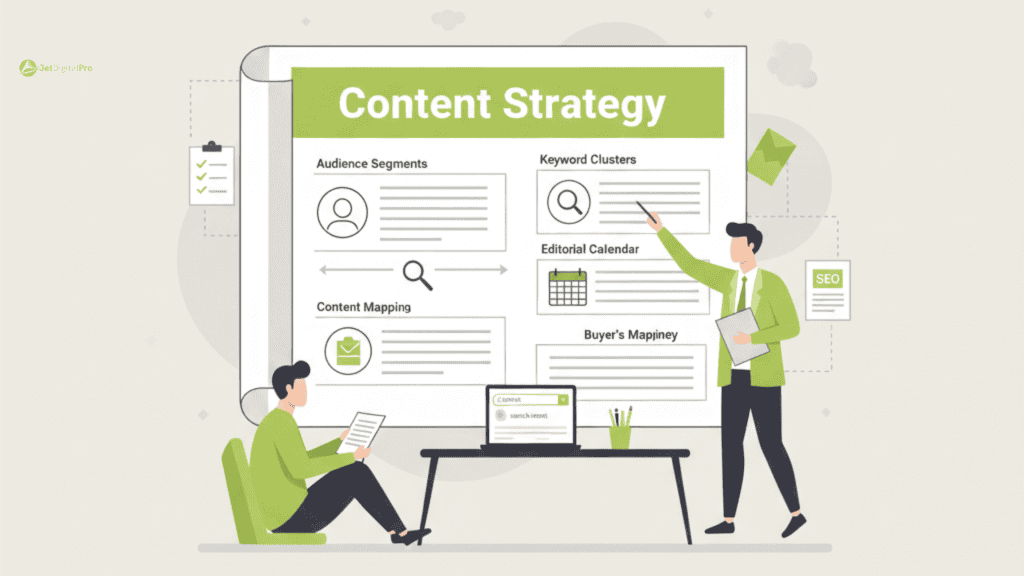
You wouldn’t build a house without a blueprint. In the same way, effective content begins with a documented SEO Agency Content Creation Process. This is where we shift from “we need content” to “we need content that achieves a specific goal for a specific audience.”
This discovery phase clarifies direction before a single word is written. The agency evaluates your current position and defines how content will support growth.
At this stage, the team will:
- Review business objectives and revenue targets
- Analyze target audience segments and search behavior
- Audit existing website pages for gaps and performance issues
- Identify competitor positioning and messaging angles
This process ensures content aligns with what your audience actually needs at each stage of the buyer journey, awareness, consideration, and decision. It replaces guesswork with structure.
Blueprinting Success: Setting Agency Content Briefing Standards
The handoff from strategy to creation is the content brief. This is where agency content briefing standards make or break a project. A weak brief is an information dump, a list of keywords and a due date. A strong brief is a shared strategy document.
At Jet Digital Pro, our briefs are built to answer every possible question a content writer might have before they write a single word. They define the content goal, the primary keyword and user intent, the desired content structure, and the target audience persona.
They include links to top-ranking content for analysis and specify SEO requirements like meta descriptions. This document becomes the guardrail, ensuring the final piece aligns perfectly with the strategic foundation, saving everyone from endless revision cycles.
The Research Engine: Demystifying Agency Keyword Research Methods
What should you write about? Agency keyword research methods answer that with data, not guesswork. It starts with understanding your offer and your audience’s language. We use a suite of keyword research tools to analyze search volume, competitive analysis, and, most importantly, search intents.
“When a keyword could have informational or transactional intent, SERP analysis alone won’t reveal which to prioritize. Get traffic ranking, then analyze which approach drives better engagement. Don’t confuse poor structure with wrong intent.” – The Digital Ring
We’re not just collecting a keyword list; we’re building topic clusters. We identify a core pillar page theme and surround it with supporting content that answers related questions, creating a web of internal linking that signals topical authority to search engines.
The goal is to find the intersection of what your audience is searching for and what you can uniquely provide, those traffic opportunities that others might miss.
From Draft to Done: The Critical Agency Editing & Proofreading Steps
A first draft is just the beginning. The polish happens through defined agency editing proofreading steps. This is a multi-layered quality gate. First, revising: does the content meet the brief’s objectives? Is the argument logical? Does it flow for the user experience? Next, editing: we sharpen sentence flow, tighten word choice, and ensure brand voice consistency.
Finally, proofreading: a line-by-line hunt for typos, grammar, and punctuation. At Jet Digital Pro, this isn’t a single pass. Different team members often handle each stage, bringing fresh eyes to catch different issues. This phased approach is what transforms a good draft into authoritative, publish-ready content.
| Process Phase | Core Focus | Outcome |
| Revising | Structure, logic, goal alignment | Cohesive, on-strategy narrative |
| Editing | Language, clarity, brand voice | Polished, readable, consistent copy |
| Proofreading | Grammar, spelling, punctuation | Technically flawless final draft |
Navigating Feedback: Streamlining the Client Approval Process Agency
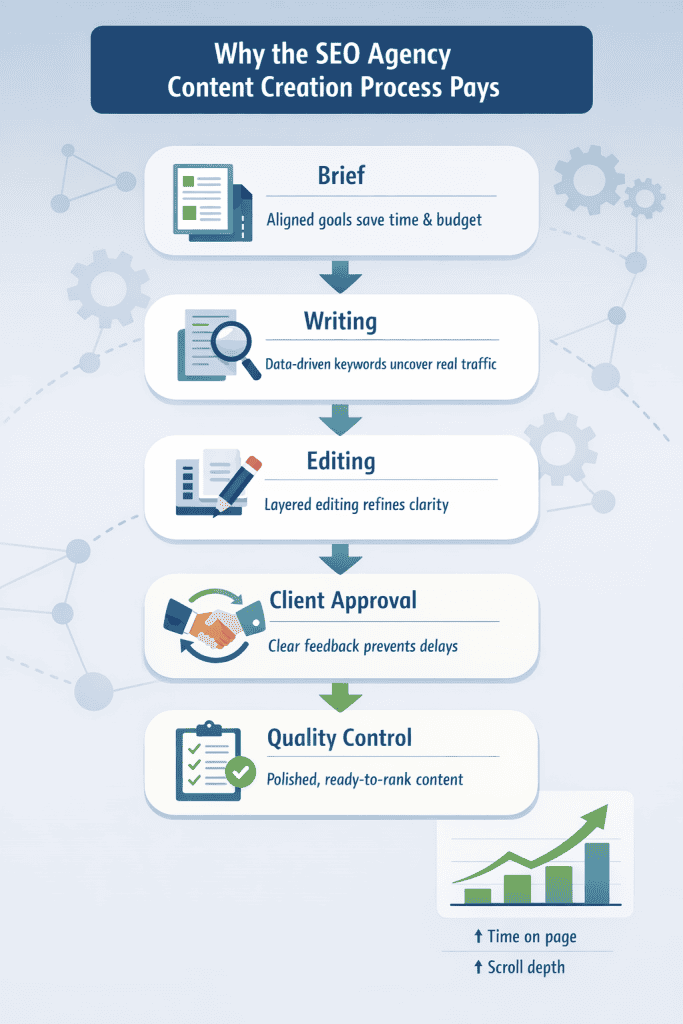
This is where many projects stall. A vague client approval process agency leads to “I’ll know it when I see it” feedback and endless loops. A structured process respects everyone’s time. Our workflow is clear: submit the drafted content through a centralized platform with specific feedback guidelines.
We encourage consolidated feedback from all stakeholders to avoid contradictory notes. Typically, our agreements include scope for two focused revision rounds, this creates efficiency and encourages thoughtful, upfront feedback.
The final step is a formal sign-off, providing a clear milestone that the content is approved and ready for the next phase, whether that’s publication or amplification.
The Guardian of Quality: Implementing a Quality Control Process Agency
Quality control process agency measures are the safety nets that run parallel to the entire workflow. It starts with the inputs: using vetted content creators and clear briefs. It’s embedded in the editorial steps. But it also looks at the output holistically.
“The goal is to reduce ambiguity, not just interpret it, ensuring that every search query and every piece of content contributes positively to the user’s journey… this often translates into building comprehensive content clusters around core topics, where each piece of content supports and clarifies related terms.” – Perpusnas
We use style guides and publishing checklists to ensure every piece, regardless of writer, meets the same standard. Post-publication, quality control continues by monitoring performance through Google Analytics, tracking click-through rates, engagement, and conversion rates.
This data feeds back into the strategy, creating a cycle of continuous improvement. It’s how we ensure that what we deliver isn’t just good once, but consistently reliable.
The Modern Toolkit: Essential Technology Used by Content Agencies
Efficiency and scale in today’s landscape are impossible without the right technology used by content agencies. The toolkit is multifaceted. For research and SEO, we rely on platforms that analyze search engines and competitor landscapes.
For workflow and the client approval process, we use collaborative platforms that centralize communication and track progress, eliminating scattered emails. In creation, AI-assisted tools help with ideation and overcoming initial drafts, but human strategy and editing are non-negotiable. For visuals, design tools create engaging visual elements.
This stack isn’t about replacing people, it’s about automating the repetitive so our team can focus on the creative and strategic work that truly moves the needle.
The Jet Digital Pro Difference: Our Integrated Approach
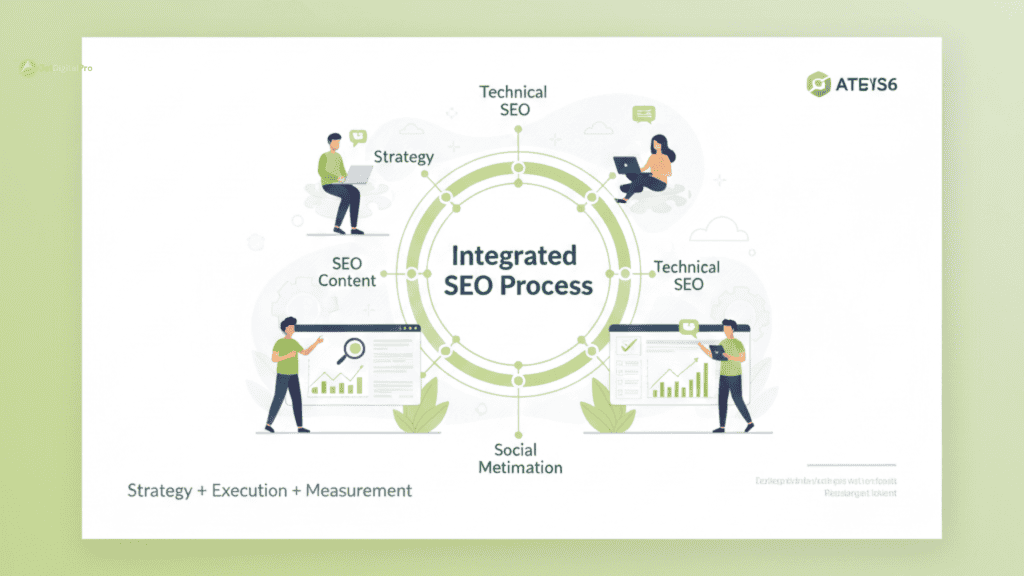
So, how does this all come together in practice? At Jet Digital Pro, our process is our product. We don’t just offer a content creation service, we offer a streamlined, white-label production engine for digital marketing agencies. We combine the strategic rigor of a documented content strategy process with the efficiency of a specialized tech stack.
Our agency keyword research methods inform our agency content briefing standards, which guide our writers. Their work then passes through our layered agency editing proofreading steps and clear client approval process agency. Every piece is backed by a quality control process agency that checks for both strategic alignment and technical excellence.
We blend AI efficiency with human expertise to deliver Google-resilient content that’s built to perform, allowing our agency partners to scale their offerings confidently.
FAQ
How does an SEO agency start the content creation process?
An SEO agency begins the SEO Agency Content Creation Process with audience research, competitive analysis, and a detailed content audit. The team studies search intent, search volume, and target keywords using keyword research tools.
They review website pages, identify content gaps, and define a clear content goal. This foundation shapes the SEO strategy and ensures content creation supports real traffic opportunity and measurable growth.
What makes an SEO content brief actually effective?
Strong SEO content briefs give clear step instructions, define the primary keyword and secondary keywords, and outline content structure. They explain user intent, internal linking plans, and SEO requirements without encouraging keyword stuffing. Good briefs also include search intents, content mapping, and reference top-ranking pages.
This helps content writers create comprehensive content that aligns with search engines and improves content rank.
How do content teams choose the right type of content?
Content teams choose the right type of content based on user intent, buyer journey stage, and commercial intent. They may create a blog post, landing pages, email marketing campaigns, or pillar page assets.
Decisions rely on keyword lists, traffic for keywords, and content challenges in the competitive market. The goal is authoritative content that supports conversion rates and user experience.
How does keyword research improve content marketing results?
Keyword research helps content creators focus on target keywords with strong search volume and realistic traffic opportunity. It guides content strategies, shapes meta descriptions, and prevents common mistakes like keyword stuffing.
By aligning SEO content with search engine optimization best practices and algorithm updates, content creation teams increase click-through rates and build steady growth across social media and search engines.
Your Next Step: Partner with a Process-Driven Team
Investing in content means investing in your growth. That deserves a real system, not just fast, cheap posts. You need a partner with clear, proven processes, someone who treats your brief as strategy, editing as essential, and your approval as a collaboration. When you know how the machine works, you can trust it with your brand.
Ready to see a system that delivers? Book your free discovery call and let’s talk.
References
- https://thedigitalring.com/insights/seo-keyword-optimization-how-to-align-with-user-search-intent
- https://presensi.perpusnas.go.id/press/1lgbhzh/perpusnas-mastering-communication-decoding-ambiguous-keywords-1764799748
Stop Guessing. Start Ranking.
Get a free sample article written for your niche. See the quality before you commit.
Get Your Free Sample Article →No credit card needed • 100% tailored to your niche