


Flexibility agency vs freelancer boils down to one thing: the kind of flexibility you need. If you need someone to adapt to your schedule and change direction on a dime, a freelancer provides that direct, agile partnership. If you need to scale a complex project predictably, an agency offers a team and a process you can rely on.
Your choice isn’t about good or bad, it’s about matching the right operational style to your immediate pressure points and long-term vision. Keep reading to understand which type of flexibility will actually serve your project, not just your budget.
Flexibility Agency vs Freelancer: Quick Insights
- Freelancers move fast and adapt quickly. You work directly with the decision-maker, making them ideal for urgent tasks, evolving scopes, and rapid pivots.
- Agencies scale with structure. Their teams and processes support consistent output across larger, ongoing projects, though changes may move more slowly.
- Your project stage determines the fit. Short-term or experimental work favors freelancers, while complex, long-term initiatives benefit from agency coordination.
Core Differences in Flexibility (Speed, Communication, Structure)
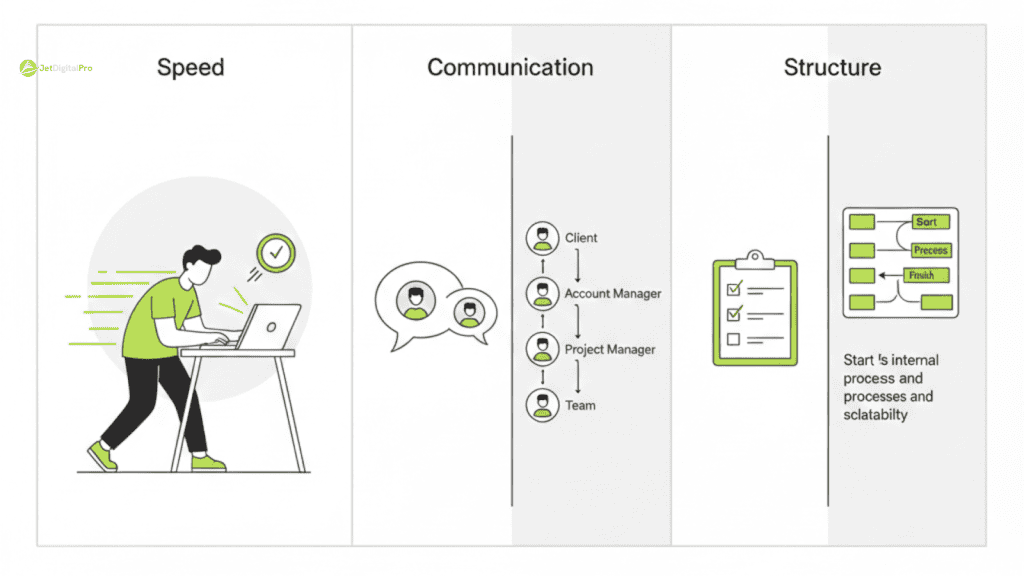
Flexibility means different things. For a freelancer, it’s personal. They can answer a late-night call or rewrite copy in an hour because the communication between agency vs freelancer models differs greatly in speed. Their setup is simple, the line is direct, and speed is everything.
“Need a quick tweak? A freelancer can often turn things around faster because they don’t have layers of internal processes to navigate. If your needs change midway, there’s usually more room for discussion and iteration without getting bogged down in rigid project structures.” – Viney (ItsViney.com)
For an agency, flexibility is about systems. They have teams and processes to scale up fast, like adding three writers to meet a sudden deadline. But that structure creates friction. Changes go through multiple people, slowing down individual decisions. You trade quick, direct action for coordinated, large-scale execution.
Freelancer Flexibility: Agility, Direct Access, and Rapid Pivots
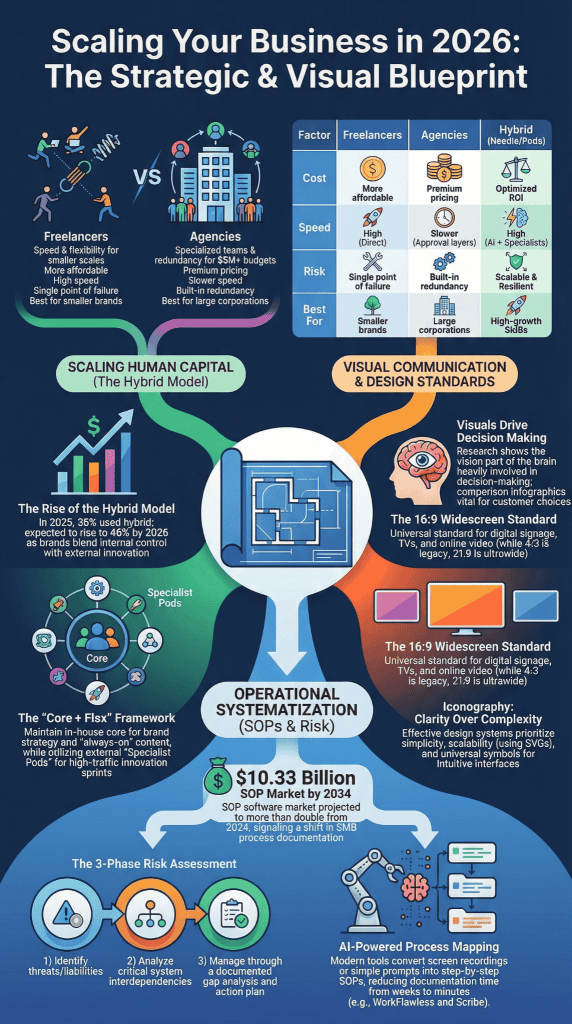
Working with a freelancer feels like having a skilled extension of your own team, just without the HR paperwork. The agility is tangible because you have a direct line and specialized communication with the person doing the work. There’s no filter.
If you need to pivot a social media campaign because a competitor launched a new product, you can brief them immediately. They can adjust the content plan that afternoon.
This model thrives on rapid iteration and personalized service. It’s perfect for:
- Testing a new content format, like short-form video.
- Handling a one-off project with a tight deadline, like a landing page for a webinar.
- Getting specialized expertise, say from a graphic designer with a very specific aesthetic.
The constraint is capacity. That very agility is tied to one person’s time. When they’re at capacity, they’re at capacity. There’s no internal team to hand overflow to. So while they can pivot fast, their bandwidth to absorb massive, sudden increases in content volume is limited. You’re betting on the individual’s stamina and organization.
Agency Flexibility: Structured Scalability and Process Control
An agency’s strength is its system. If you are comparing an agency vs freelancer for seo content, you’ll find that with an agency you aren’t just hiring a writer; you’re plugging into a team that provides stability and high-volume output. If someone gets sick or takes a vacation, the work continues.
The process is built to manage volume and maintain a consistent brand voice across everything they produce, which is crucial for long-term marketing.
“Agencies, with their flexible teams, can handle big workloads. They work together to manage tasks, covering all your marketing bases. This setup adds security and reliability, as they can adjust resources as needed.” – Bonoboz
The flip side is agility. That same system, with its project managers, schedules, and approval steps, can slow down small, last-minute requests. Asking for a quick edit might mean waiting for the next planning cycle. Their flexibility lies in scaling the workload up or down, not in making sudden, sharp turns.
Side-by-Side Comparison: Adaptation, Communication, Scalability, Project Fit
Let’s put the practical differences on the table. This isn’t about which is better, but about which traits align with your current situation.
| Aspect | Freelancer Advantage | Agency Advantage |
| Adaptation Speed | High. Solo decisions allow for quick changes and last-minute shifts. | Lower. Structured approvals and resource scheduling can delay immediate pivots. |
| Communication | Direct and personal. You speak directly with the executor. | Layered. You often work with an account manager, which can streamline or slow feedback. |
| Scalability | Limited by one person’s capacity. Hard to suddenly double output. | High. Can expand the team assigned to your project to meet increased demands. |
| Ideal Project Fit | Short-term, niche, or experimental tasks. Urgent, defined projects. | Long-term, complex, or multi-skill campaigns. Ongoing brand-critical work. |
Real-World Sentiment: Reddit, X, and Community Perspectives
Don’t just take our word for it. The real talk online shows how this flexibility works in practice, for better and worse. On Reddit, conversations get blunt. Business owners post about firing their agency because “decisions now take hours, not weeks,” praising a freelancer’s direct line and speed.
Right below, another user warns about the risk: “My freelancer disappeared 48 hours before a project deadline. No backup, no explanation.”
The tone on X is sharper, often tied to stress. Scroll through #AgencyLife or #FreelancerStruggles. Freelancers post about the freedom to work any time, then immediately complain about unstable income. Critiques of agencies focus on slow, expensive processes.
One popular post argued, “Their ‘flexibility’ is just a sales pitch. Try to adjust your project without triggering a new contract and a huge fee.”
The pattern is clear. A freelancer offers genuine speed and adaptability, but you shoulder all the risk. An agency provides reliable systems and manpower, but you often sacrifice agility. The consensus from these communities is simple: figure out exactly what kind of flexibility you need, and then vet your potential partner without mercy on that specific point.
Common Objections: Burnout, Ghosting, Bureaucracy, and Scope Creep
Both options come with specific headaches you should expect.
With freelancers, the main worries are burnout and ghosting. A solo operator juggling too much work can suddenly go quiet, leaving your project in limbo. Scope creep is another issue, that “small favor” you ask for can easily become hours of unpaid work, frustrating everyone involved.
For agencies, the complaints center on bureaucracy and feeling unimportant. You might be stuck talking to a manager who doesn’t understand the nitty-gritty of your work. Getting anything changed feels slow because it has to go through channels. If you’re not a top-tier client, you might also feel like your project is constantly getting deprioritized.
Risk Management: SLAs, Backups, and Capacity Planning
You can’t eliminate risk, but you can manage it. With a freelancer, management is proactive. Have a clear agreement on scope, deadlines, and revision limits. Ask about their typical workload and backup plans for illness. Some freelancers have informal networks to cover emergencies. You’re essentially doing light capacity planning for them.
With an agency, risk management is baked into the Service Level Agreement (SLA). This document should outline response times, revision policies, and escalation paths. Their value is in their bench, they should have a backup writer or developer.
Your job is to ensure the SLA matches your expectations and that you understand the points of contact within their structured system.
Hybrid Models: Combining Freelance Agility with Agency Stability
Why choose one? The most resilient businesses often blend models. They might keep an agency on retainer for core, brand-consistent work like their main blog and SEO strategy. Then, they use a trusted freelancer for rapid-turnaround projects, like social media assets for a trending topic or a specialized landing page.
This hybrid approach lets you tap into agility for urgent needs while maintaining a scalable foundation for your core content plan. The key is clear role definition. You must know which channel to use for which task to avoid confusion and duplication of effort.
How to Choose Based on Project Type, Urgency, and Growth Stage
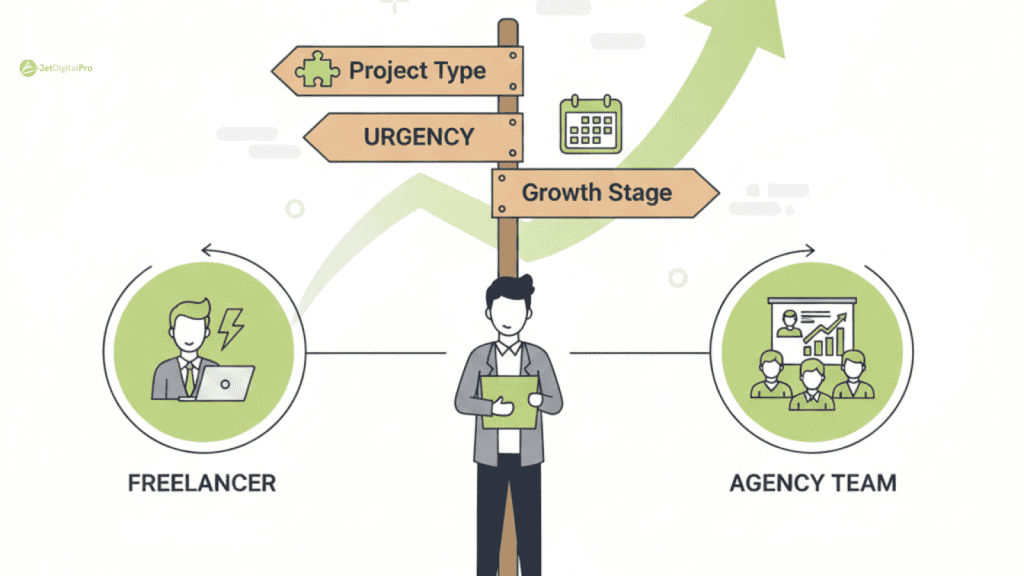
Your decision matrix should be simple. Ask three questions:
- Project Type & Scope: Is this a one-off, defined task (e.g., design a logo) or an ongoing, complex campaign (e.g., a full digital marketing strategy)? Niche, short-term favors a freelancer. Broad, long-term favors an agency.
- Urgency & Need for Pivots: Do you need to move extremely fast and expect frequent changes? A freelancer’s direct line is better. Is predictable, consistent output over months more important than daily speed? An agency’s process wins.
- Your Growth Stage: A scrappy startup might rely on freelancers for flexibility and cost. A scaling company needing to build a solid, recognizable brand voice might graduate to an agency to instill consistency.
FAQ
Is flexibility agency vs freelancer better for small businesses?
For small businesses, flexibility agency vs freelancer depends on workload and goals. A freelancer works well for focused content creation, blog posts, or a quick landing page. An agency may help if you need ongoing content marketing, social media management, and scalable solutions.
Think about your content volume, budget, and how fast you need changes before making business decisions.
How does flexibility agency vs freelancer affect project scope changes?
Flexibility agency vs freelancer matters when your project scope shifts often. A freelancer can quickly adjust content strategy, SEO optimization, or web design without heavy internal processes.
Agencies rely on project management systems, account managers, and a ticketing system. That structure protects timelines but can slow small edits, content production tweaks, or sudden social media campaign updates.
Which model handles higher content volume and content production?
When content volume grows, flexibility agency vs freelancer becomes critical. Agencies can assign a project manager, graphic designer, or web developer to manage content production at scale.
They follow brand guidelines and support large digital marketing strategy goals. Freelancers handle lower or medium output well, but high-volume content marketing or social media assets may stretch one person’s capacity.
How does flexibility agency vs freelancer impact SEO strategies?
Flexibility agency vs freelancer affects how you manage SEO strategies and performance analysis. A freelancer may focus deeply on SEO optimization for blog posts or a landing page.
An agency can combine market research, analytics tools, and broader digital marketing efforts. If your content plan connects to long-term growth, structured content management may offer more consistency.
Strategic Takeaways for Long-Term Flexibility and Resilience
True flexibility means planning for the long haul. Freelancers are agile but can max out. Agencies scale but move slower. The smartest approach is building a network of both. This gives you real options to handle any project phase.
If you need consistent, high-volume content that still feels personal and responsive, our hybrid model is built for that. We combine scalable systems with direct collaboration.
Ready to build a resilient content strategy? Get in touch with our team to discuss your needs.
References
- https://www.itsviney.com/freelancer-vs-agency-who-should-build-your-website/
- https://www.bonoboz.in/freelancer-vs-agency/
