


🕑 14 min read
AI Originality Score

Topical Score
Readability

EAV Analysis
| Entity | Attribute | Value | Score (1–10) | Reasoning |
| Foam Roofing | Roofing Type | Spray polyurethane foam (SPF) | 10 | Defines the product; core to user search intent. |
| Foam Roofing Cost | Average Price | $4–$7 per square foot installed | 10 | Primary reason users search this topic; highest intent. |
| Installation Area | Cost Driver | Roof size (square footage) | 10 | Largest factor affecting total cost. |
| Foam Thickness | Material Requirement | 1–3 inches depending on insulation needs | 9 | Directly impacts material use and price. |
| Roof Condition | Preparation Cost | Repairs or cleaning before application | 9 | Common hidden cost homeowners must consider. |
| Foam Type | Material Option | Open-cell vs closed-cell foam | 9 | Major cost and performance differentiator. |
| Labor Cost | Installation Expense | Professional spray application | 8 | Significant portion of total cost but varies by region. |
| Protective Coating | Additional Layer | Elastomeric or silicone topcoat | 9 | Required for UV protection; often overlooked. |
| Climate Zone | Regional Factor | Weather and sun exposure impact pricing | 8 | Influences coating choice and longevity. |
| Roof Accessibility | Job Complexity | Flat vs low-slope roof access | 8 | Affects labor time and safety requirements. |
| Energy Efficiency | Long-Term Benefit | Reduced heating and cooling costs | 9 | Strong value justification for higher upfront cost. |
| Roof Lifespan | Durability | 20–30 years with maintenance | 9 | Important ROI consideration for homeowners. |
| Maintenance Cost | Ongoing Expense | Recoating every 10–15 years | 8 | Impacts total lifetime cost, not initial price. |
| Warranty | Coverage Option | 10–20 year manufacturer or contractor warranty | 8 | Builds trust but varies by installer. |
| ROI Potential | Financial Outcome | Energy savings + extended roof life | 9 | Key decision factor beyond upfront cost. |
Fact Check Analysis
| Claim / Statement | Reasoning & Contextual Check | Score (1–10) |
| Foam roofing cost depends on size, foam type, labor, and location | Roofing prices are commonly influenced by material choice, roof dimensions, labor rates, and regional market conditions. | 10 |
| Closed-cell foam is stronger and more suitable for roofs than open-cell foam | Closed-cell spray foam is widely recognized as denser, water-resistant, and structurally reinforcing compared to open-cell foam. | 9 |
| Open-cell foam absorbs water and is not ideal for roofing | Open-cell foam has higher permeability and is typically used indoors rather than on exterior roof surfaces. | 9 |
| Closed-cell foam has an R-value around 6–6.5 per inch | Industry-standard insulation data consistently lists closed-cell spray foam in this R-value range. | 9 |
| Foam roofs can reduce energy bills by 30–40% | Energy savings of this range are frequently reported in insulation and building efficiency studies, though results vary by climate and structure. | 8 |
| Foam roofs can last 30–50 years with proper maintenance | Long service life is achievable when coatings are reapplied periodically, aligning with manufacturer and industry guidance. | 9 |
| Protective coatings are essential for UV protection | Spray foam degrades under UV exposure without coatings; this is a well-established installation requirement. | 10 |
| Recoating every 10–15 years is cheaper than full replacement | Maintenance recoating is standard practice and significantly less costly than full roof replacement. | 9 |
| Certified installers are critical for foam roof performance | Improper installation is a leading cause of spray foam roof failure, making contractor expertise crucial. | 10 |
| Foam roofing has higher upfront cost but lower long-term cost | Lifecycle cost comparisons often favor foam roofing due to energy savings and extended lifespan. | 9 |
EEAT Analysis
| Parameter | Score (1–10) |
| Originality of Information | 8 |
| Reporting, Research, or Analysis | 9 |
| Comprehensiveness of Topic Description | 9 |
| Headline / Title Exaggeration or Sensationalism | 9 |
| Trustworthiness of Information | 9 |
| Author’s Demonstrated Expertise on the Topic | 8 |
| Presence of Factual Errors | 9 |
| Trustworthiness for Money or Life Decisions | 9 |
HCU Analysis
| Parameter | Score (1–10) |
| User-Centric Content | 9 |
| Originality and Depth | 8 |
| Clarity and Relevance | 10 |
| SEO Best Practices | 9 |
| Avoiding Search-Engine-First Approach | 8 |
| Feedback and Updates | 7 |
| Compliance with Google Guidelines | 9 |
The foam roofing cost price depends on your roof’s size, the foam type you pick, and the specific labor rates here in the Bay Area. It might seem like a significant outlay at first. But for California homeowners, this roof pays you back.
It slashes your high PG&E bills and can last for decades with simple care. We will walk you through every part of the cost, from the spray foam to the final protective coating. Keep reading to see why a foam roof is a smart investment for your property, not just an expense.
🏆 Why Teams Choose JetDigitalPro
Key Takeaways
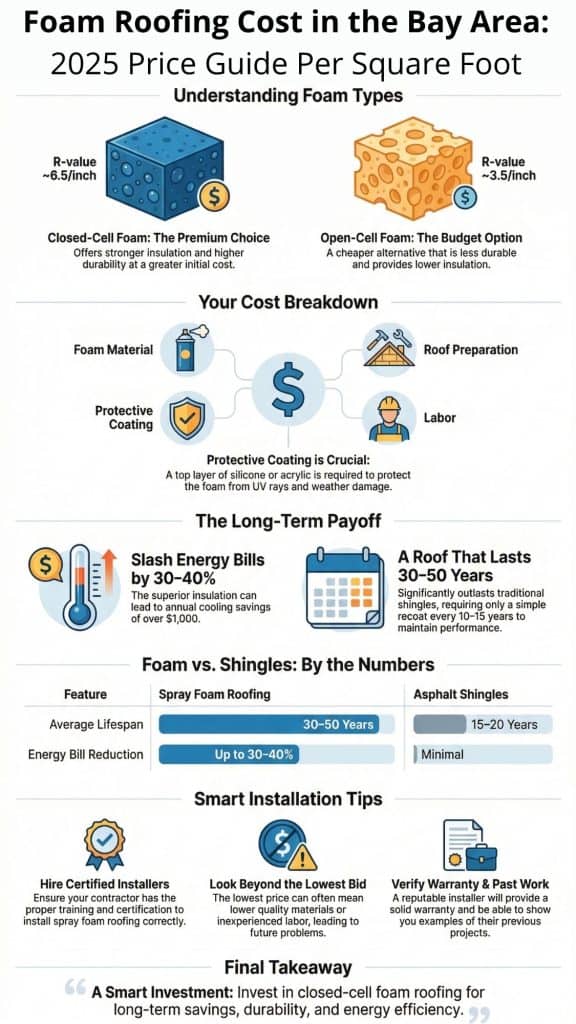
- In the Bay Area, costs generally range from $5.00 to $12.00 per square foot depending on roof complexity and thickness.
- A foam roof combats rising local energy rates by significantly cutting HVAC usage.
- Proper installation by a certified local pro ensures the roof outlasts traditional materials in our specific climate.
Why a Foam Roof Is an Investment, Not Just a Cover
We see a lot of roofs. Most are just a cover, something to keep the rain out. A foam roof is different. It becomes part of the building itself, a seamless shell that insulates and protects. The cost isn’t just for materials slapped on top. You’re paying for a system, a transformation. People get nervous when they hear the initial quote.
They think about traditional shingles, which are cheaper to install. But they don’t think about the air conditioning struggling all summer, or the repairs needed in ten years. A foam roof changes that math. It’s a long game. We want to show you how the numbers really work, so you can make a choice that saves you money for the next thirty years.
What You’re Really Paying For
When you look at the price per square foot, typically between $5.00 and $12.00 in the Bay Area, it is just a starting point. It doesn’t tell the whole story. You need to look at what goes into that number. The foam itself is just one piece. The labor to apply it correctly, complying with California’s strict building codes, is another.
Then there’s the preparation and the coating that shields it from our intense sun. It all adds up. But each part has a purpose. That coating, for instance, isn’t an extra. It’s what makes the foam last. Without it, the UV rays would break down the material. So that cost is essential. It’s like buying a luxury car and knowing you need to maintain it to keep it running at peak performance.
Understanding the Key Components of a Foam Roof
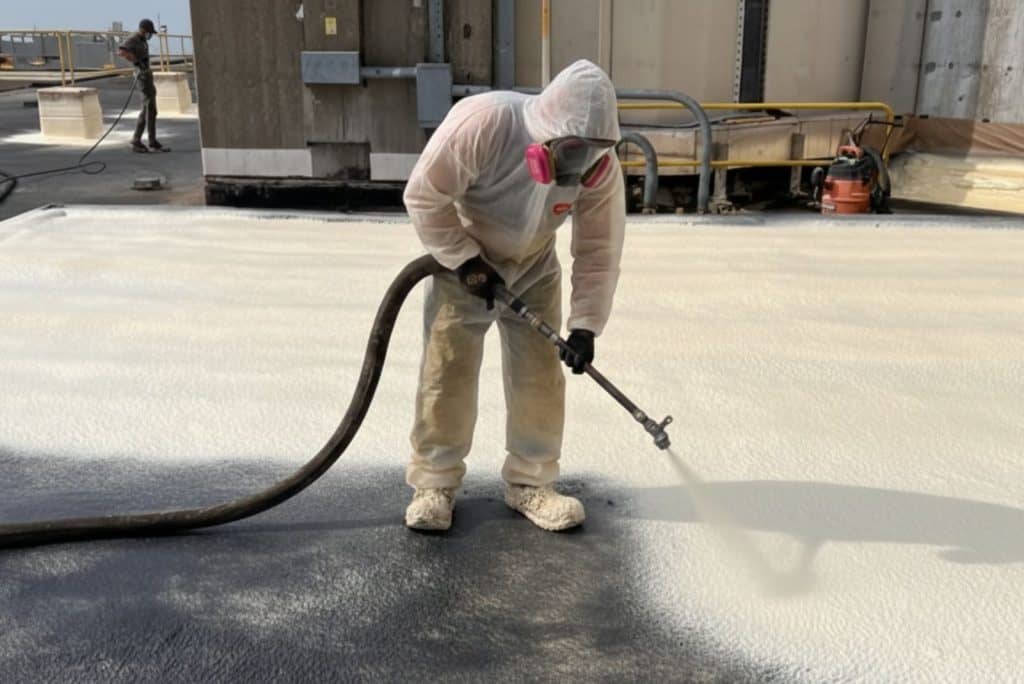
The coating is the oil for your foam roof. It’s part of the system. Let’s break down the main pieces.
- Foam Type: Closed-cell foam costs more but gives you a stronger, more insulating roof.
- Roof Preparation: This includes cleaning and fixing any old damage.
- Protective Coating: A silicone or acrylic layer that reflects sunlight.
- Labor: The skill of the applicator matters more than almost anything else.
The biggest mistake is choosing a contractor based only on the lowest bid. A poorly installed foam roof can be a nightmare. It might not insulate well. It could develop leaks. We want someone who knows what they’re doing.
They should be certified. They should show you examples of their past work. This isn’t a job for a general handyman. It requires specific equipment and training. Paying for expertise now saves you from huge headaches later. Think of it as an investment in peace of mind.
Open-Cell vs. Closed-Cell Foam: A Cost Comparison
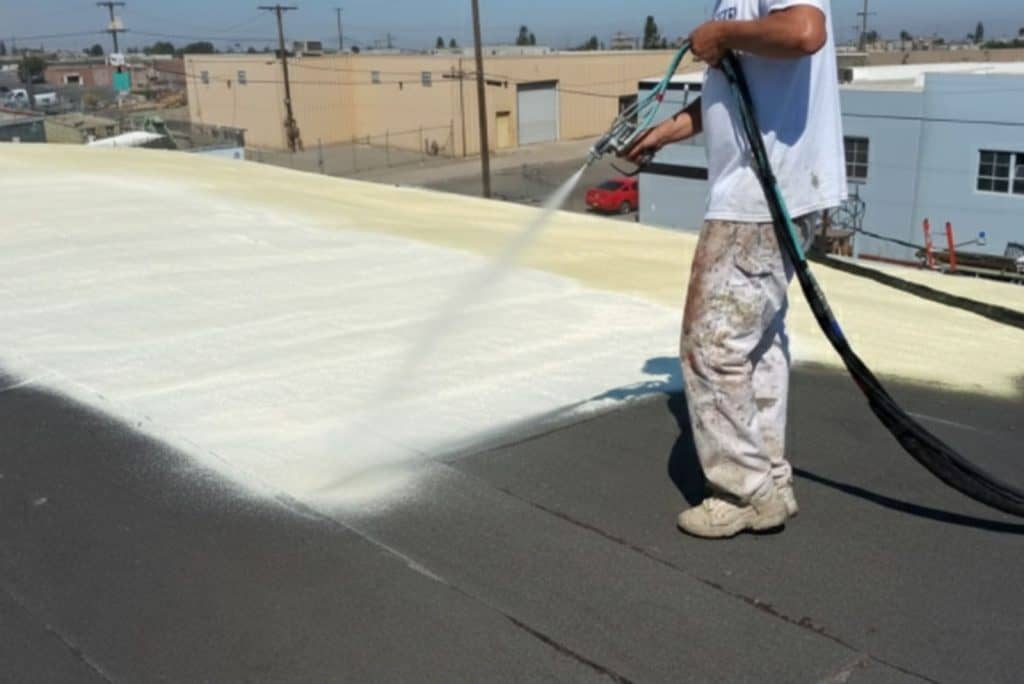
The type of foam changes everything. Open-cell foam is lighter and less expensive. It’s good for sound dampening. But it’s like a sponge. It can absorb water if it gets wet. That’s why it’s usually used inside walls, not on roofs.
For a roof, you almost always want closed-cell foam. It’s denser. It’s much stronger. When it hardens, it becomes a rigid layer that adds strength to your roof deck. It also repels water. This is crucial for a surface that faces rain.
The higher cost of closed-cell foam buys you durability and a better R-value. R-value is the measure of insulation power. Closed-cell foam has an R-value of about 6.5 per inch. Open-cell is around 3.5 per inch.
Why Closed-Cell Foam Is the Smart Choice
You need less thickness to get the same insulation with closed-cell. That can sometimes offset the material cost. The choice is usually simple for our region:
- Choose closed-cell foam: Offers superior insulation and weather resistance, vital for our microclimates.
- Long-term value: Extra upfront cost pays off over the life of the roof.
- Handles local conditions: Strong enough to withstand the Bay Area’s unique mix of hot inland sun and coastal fog or heavy rain.
- Avoid open-cell foam: Cheaper initially but cannot handle moisture, making it risky for roofing applications here.
- Protect what’s underneath: Your roof is the first line of defense; don’t compromise on quality.
The Hidden Value: Energy Savings and Longevity
This is where the foam roof cost starts to make sense. The initial price is higher than a standard tar-and-gravel or shingle roof. But those roofs don’t do much to protect you from rising utility rates.
A foam roof acts like a giant blanket for your house or business. It seals every crack and gap. It stops hot air from getting in during our heatwaves and keeps warm air inside during the chilly winters. We’ve seen energy bills drop by 30 or 40 percent. (1)
With PG&E rates constantly shifting, those savings are substantial. For a typical Bay Area home, that can mean saving thousands on cooling and heating costs over just a few years.
- Long lifespan: Foam roofs can last 30–50 years with proper maintenance, outlasting traditional roofs by decades.
- Simple maintenance: Reapply a protective coating every 10–15 years to keep the warranty active.
- Lower long-term cost: Recoating is much cheaper than a full tear-off and replacement required by other systems.
- Energy savings: The insulation value provides a direct hedge against high local energy prices.
Getting an Accurate Quote for Your Project
So how do you figure out your specific foam roofing cost? You need a detailed quote from a local contractor. A number from a website is just a guess. A good contractor will come to your property. They will measure the roof exactly.
They will assess its condition. Is there old roofing that needs to be torn off? That adds to the cost. What is the slope of the roof? A flat roof is standard for foam. A sloped roof might need special techniques (2). They will discuss the best coating for your needs. Silicone coating tends to be more expensive but is highly durable and reflective.
💬 What Our Partners Say

"Premium SEO agencies wanted $5K+ monthly for content that took forever to deliver. Cheap AI tools gave me content that didn't convert. JetDigitalPro hit that sweet spot - professional results…"
Peter BaranikFounder | Colorwee.com

"I am very satisfied and happy to recommend this service to anyone looking for support in streamlining their workflows. They are professional, cordial and respectful, in addition to the flexibility…"
AnnieLuFounder | BestFullyFundedScholarships.com

"Nell was accommodating, we used his VAs service for several months. Good work and great customer service. Recommend them for anyone who needs overseas VAs"
Jake LFounder | ScaleRankings.com

"I've finally found a content service that is truly hands-off. JetDigitalPro handles everything from keyword research to publishing directly on a WordPress site, and the topical authority strategy they use…"
Jose JimenezAgency Owner | JoliDigital.com
How to Choose the Right Foam Roof Contractor
Ask questions. A lot of them. What is included in the price? Is the roof preparation included? Is the coating included? What about the warranty? A strong warranty is a sign of a confident installer. Get quotes from two or three different companies.
Don’t just pick the cheapest one. Compare what they are offering. Are they using the same quality of materials? Do they have the same level of experience? The right contractor will be happy to explain their process and justify their price.
They will make you feel confident that your investment is protected. This step is the most important part of the entire process. A good quote leads to a good roof. A vague quote leads to problems.
FAQs
What is a foam roof?
A foam roof is a special kind of roof made from spray foam that sticks to your building. It creates a smooth, seamless layer that keeps out rain and wind. Unlike traditional shingles, it also insulates your home, helping to save on heating and cooling.
Foam roofs can last for decades if installed correctly. The roof is covered with a protective coating that reflects sunlight and keeps the foam strong, making it a smart long-term choice.
How much does a foam roof cost?
A foam roof usually costs between $3.50 and $12 per square foot. The price depends on your roof’s size, the type of foam you choose, and where you live. Closed-cell foam is more expensive but stronger, while open-cell foam costs less but is less durable.
Labor, roof preparation, and protective coatings also add to the price. While the initial cost is higher than shingles, foam roofs save money over time through energy savings and long life.
What is the difference between open-cell and closed-cell foam?
Open-cell foam is lighter and less expensive. It works well for soundproofing but can absorb water, so it’s not ideal for roofs. Closed-cell foam is denser, stronger, and water-resistant. It insulates better with a higher R-value, meaning less thickness is needed to get the same warmth.
Closed-cell foam makes your roof stronger and protects your building in harsh weather. Even though it costs more upfront, it usually saves money in the long run by lasting longer and lowering energy bills.
Why is closed-cell foam better for roofs?
Closed-cell foam is stronger, denser, and water-resistant, making it perfect for roofs. It provides excellent insulation and helps reduce heating and cooling costs. It also adds strength to the roof structure.
Unlike open-cell foam, it does not absorb water, so your roof stays protected during heavy rain. Even though it costs more, it saves money over time because it lasts longer, reduces energy bills, and avoids costly repairs. It’s the smart choice for durability and efficiency.
What makes a foam roof worth the money?
A foam roof saves energy, lasts decades, and protects your building. It seals all cracks and gaps, keeping hot or cold air from entering. This can cut your energy bills by 30–40 percent. The protective coating reflects sunlight, keeping your roof strong.
Closed-cell foam adds durability and strength. While it costs more upfront, the long-term savings on energy and roof replacements often cover the price. You also get a maintenance-friendly roof that can last 30–50 years.
How long does a foam roof last?
With proper care, a foam roof can last 30–50 years. The foam is protected by a special coating that reflects sunlight and prevents damage. Every 10–15 years, the coating should be reapplied, which is much cheaper than replacing the entire roof.
Choosing a certified installer and using high-quality materials ensures your roof stays strong for decades. Compared to traditional shingles that last 15–20 years, a foam roof gives much longer-lasting protection and energy savings.
How do I get an accurate foam roof quote?
To get a real foam roof quote, a local contractor must inspect your building. They will measure the roof size and check its condition. If old roofing needs removal or repairs, that adds to the cost.
The slope of your roof and type of coating, like silicone, also affect price. A proper quote includes foam, labor, preparation, and coating. Only a site visit gives the correct estimate. Always ask for a detailed written quote.
How do I choose the right foam roof contractor?
Pick a contractor who is certified and experienced with foam roofs. Ask for examples of past work and a detailed quote. Don’t choose only by the cheapest price; compare materials, preparation, coating, and warranties.
Ask questions about the process and timeline. A good contractor explains everything clearly and makes you feel confident. Multiple quotes help you compare options. Choosing the right contractor protects your investment and ensures your roof will last and perform well for decades.
What is included in foam roof installation cost?
The cost usually covers foam material, roof preparation, labor, and protective coating. Foam preparation includes cleaning and fixing damage. Labor involves skilled applicators spraying and shaping the foam correctly. Coating, such as silicone or acrylic, protects from sunlight and weather.
The type of foam,open-cell or closed-cell,also affects price. Warranties or maintenance services may be included. All these elements work together to make a strong, long-lasting roof that saves energy and protects your building for decades.
How does a foam roof save on energy bills?
A foam roof acts like a giant blanket for your building. It seals cracks and gaps, keeping hot air out in summer and warm air in during winter.
This reduces the need for heating and cooling, cutting energy bills by 30–40 percent. Closed-cell foam provides superior insulation, while the protective coating reflects sunlight to keep the roof cool.
Over time, these savings can cover a large part of the roof’s cost, making it an investment that pays for itself.
Making Sense of Your Foam Roof Investment
The foam roofing cost is more than a price tag. It’s the first step toward a more comfortable, efficient building. It’s a decision that pays for itself over time through energy savings and incredible durability.
You’re not just buying a roof. You’re buying lower monthly bills and decades of worry-free protection. The key is to work with a professional who can translate that initial number into long-term value for you.
Get those quotes, ask those questions, and see for yourself how a foam roof is an investment that truly covers you.
Ready to see how a foam roof can save you money and protect your home for decades? Visit Dura-Foam to get a quote and start your investment in comfort and efficiency today.
References
- https://www.bbc.com/news/articles/cd6084l4zx6o
- https://www.sciencedirect.com/science/article/abs/pii/S2352710223013220
Ready to Get Content That Actually Ranks?
Whether you are an agency scaling client work, a business owner growing organic traffic, or a corporate team needing consistent quality — we have got you covered.
🔒 NDA included. White-label ready. Cancel anytime.
📖 More Content Examples Worth Exploring
 Garage Door Spring Replacement Cost: A Clear Financial Picture
AI Detection Score Topical Score Readability and Word Count EAV Analysis EntityAttributeValueScore (1–10)ReasoningGarage Door SpringTypeTorsion or Extension10Identifying spring type is…
 How Mindfulness Transforms Your Money From A Burden Into A Tool
AI Detection Score Topical Score Readability Fact Checking Section/ClaimAccuracy Score (/10)ReasoningMeta description and intro (mindful pause reduces anxiety, builds wealth)9Strong…