

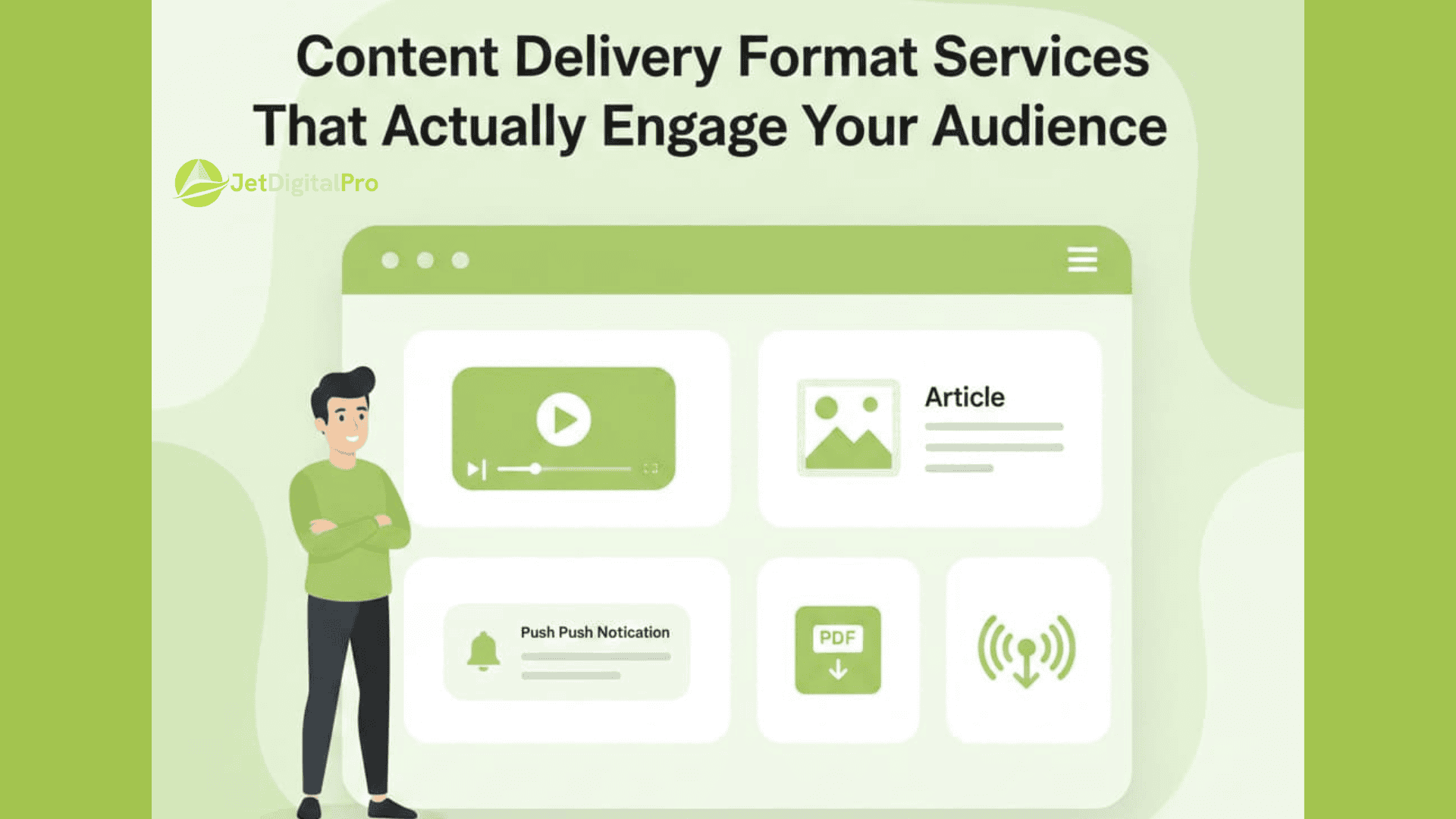
Your content isn’t broken, the way it shows up is. A sharp report trapped in a slow PDF on a phone, a thoughtful video that jitters on a tablet, a clear idea squeezed into the wrong format for the moment. That’s usually where you lose people.
A content delivery formats service helps align what you say with how, where, and when users actually consume it. When format and context match, your message feels natural, not forced or fragile. Keep reading to see how to close that gap and make every piece of content actually reach its audience.
Key Takeaways
- Match your content format to your audience’s consumption habits.
- Use a unified platform to manage delivery across all channels.
- Prioritize speed and accessibility to keep users engaged.
The Real Cost of Getting Delivery Wrong
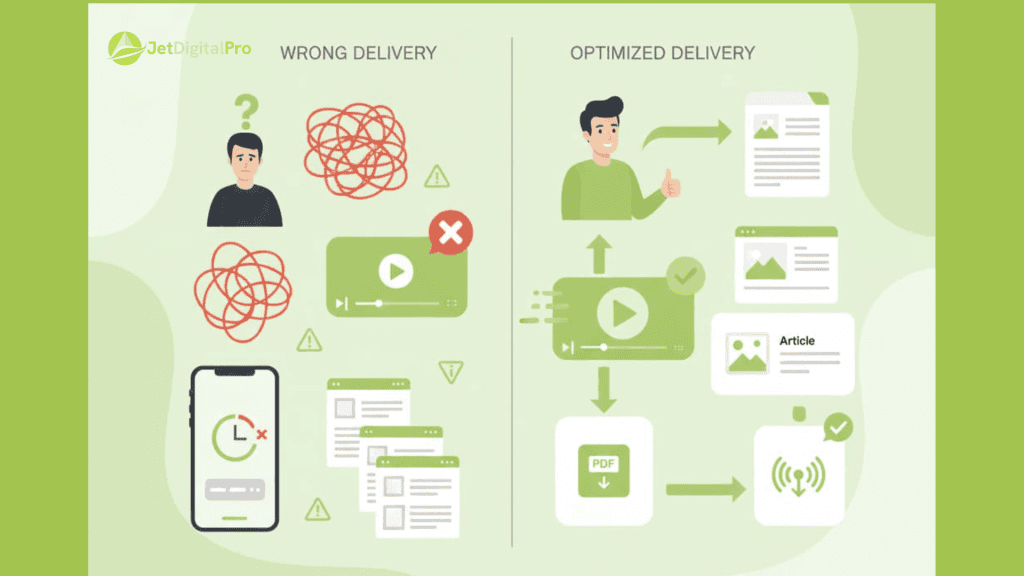
We watched a client launch a new ebook once, and it still sticks with us. The content was sharp. The design was clean. But the delivery? Just a simple download link to a massive file. On mobile, it crawled.
People dropped off, bounce rates climbed, and that great ebook never really had a chance. That moment changed how we work at Jet Digital Pro. Now, delivery comes first, not last. It’s the final step in the content lifecycle, and when it fails, all the strategy, writing, and design behind it quietly goes to waste.
Content delivery isn’t just a technical detail. It’s part of the user experience, as real as the headline or the color palette. A video that drags or a document that won’t render right tells users something before they read a single line: their time isn’t being considered.
That chips away at trust early. This reflects the importance of quality assurance SEO writing where every detail, including how content is delivered, affects user trust and engagement.
So we work to make access feel almost invisible, like the content is simply there when they reach for it. That means thinking about connection speed, device type, and user intent from the first draft. It’s about showing respect for their attention, and that respect usually comes back as longer sessions and better conversion.
The environment your content lives in is more fragmented than ever. Someone might see a teaser on social media from their phone, dig into details later on a laptop, then revisit it on a tablet at home. Your content has to hold up in each of those jumps.
One format for every situation just doesn’t survive that reality. You need a clear plan. That starts with knowing what each delivery option is built for, and pairing it with the right moment.
- Downloadable Files: Best for high-value assets people may want to keep, like ebooks, white papers, and deep-dive guides.
- Streaming Media: Well-suited for tutorials, webinars, podcasts, and any content where “click and play now” really matters.
- Adaptive Web Content: Ideal for articles, product pages, and ongoing updates that need to look good and load well on any screen.
Choosing the Right Format Isn’t Guesswork
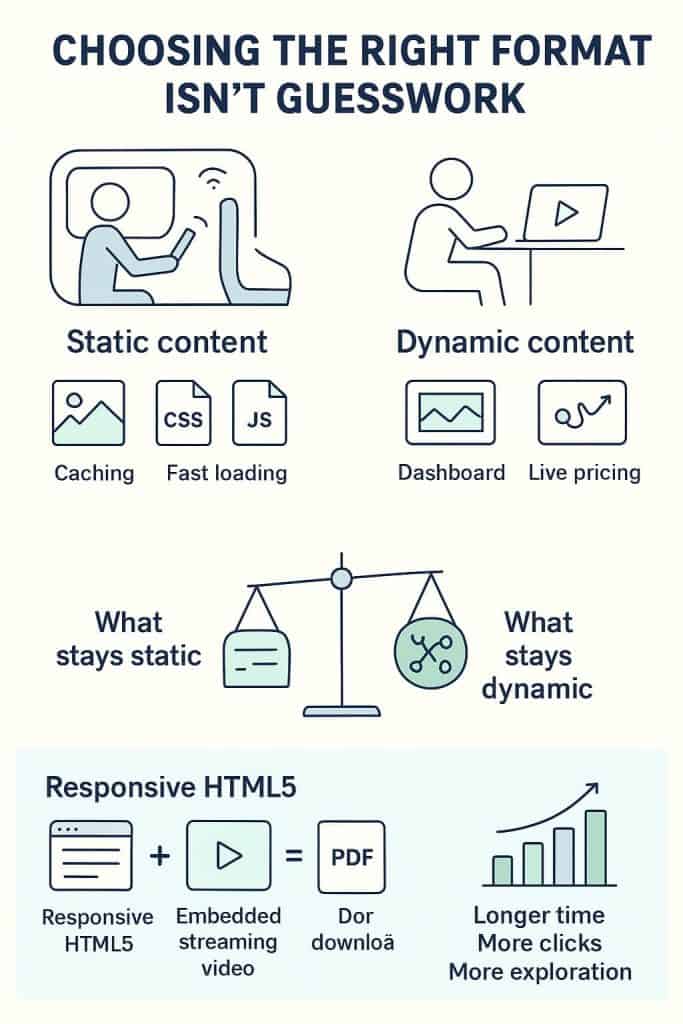
Formats aren’t just file names like PDF or MP4, they’re decisions about how someone is actually going to live with your content. The real question is: what is the user trying to do at that moment? Professionals understand that how services research keywords directly impacts the relevance of content formats chosen, ensuring that content meets real user intent across devices and contexts.
If they’re on a train with a shaky connection, a small, offline-ready PDF can be a better option than a heavy streaming file. If they’re on a short break and want a quick how-to, a streaming video that starts right away fits that small window of time. We map out these real scenarios with clients so choosing a format feels deliberate, not decorative. The format should follow the function, every time.
Some pieces are built for speed from the start:
- Static content (images, CSS, JS)
- Can be cached and stored on edge servers
- Delivers fast, predictable loading
Other pieces are more complex and personal:
- Dynamic content (dashboards, live pricing, inventory)
- Changes often or per user
- Needs smarter routing and processing to feel snappy
The art is in deciding:
- What can stay static
- What must stay dynamic
- How those two work together without fighting each other
That split is what we design into our hybrid strategies at Jet Digital Pro, so performance and personalization don’t cancel each other out.
And sometimes, there isn’t a single “right” format, there’s a planned combination:
- An interactive guide might:
- Start as responsive HTML5 for easy reading
- Include an embedded streaming video for deeper context
- Offer a PDF download for saving or offline use
This kind of flexible structure meets people in different environments without forcing them down one single path. The analytics keep telling the same story: when users can choose how to engage, they stay longer, they click more, and they explore more of what you’ve created.[1]
How Delivery Models Work Behind the Scenes
The service moving your content around matters as much as the format sitting on top of it. A Push CDN, for example, feels a bit like stocking neighborhood library branches before readers arrive.
Popular or frequently updated content is copied out to servers across the globe ahead of time. This mirrors principles found in how SEO writing services work, where strategic planning and delivery are integrated early for seamless user experience.
That’s ideal for:
- News updates
- Rotating offers
- Weekly content drops
When someone taps “download” or “play,” the file is already nearby, so delivery feels almost instant. You do more planning and setup early, but you gain real speed where it actually shows.
A Pull CDN works the other way, closer to a “request, then stock” model. The edge server doesn’t keep a copy until a user asks for it. That first request pulls the file from the origin, then it’s cached for later users. It fits well for:
- Archived video
- Large research PDFs
- Legacy or low-traffic assets
You save on storage, but the very first user pays a bit of latency.
Most modern systems live in between, using hybrid delivery. Some content is pushed, some is pulled, and sometimes peer-to-peer (P2P) sharing helps during heavy peaks. At Jet Digital Pro, that mix is built into our architecture so traffic spikes don’t shake performance, no matter where users connect from.
Making Your Content Feel Instant on Any Device
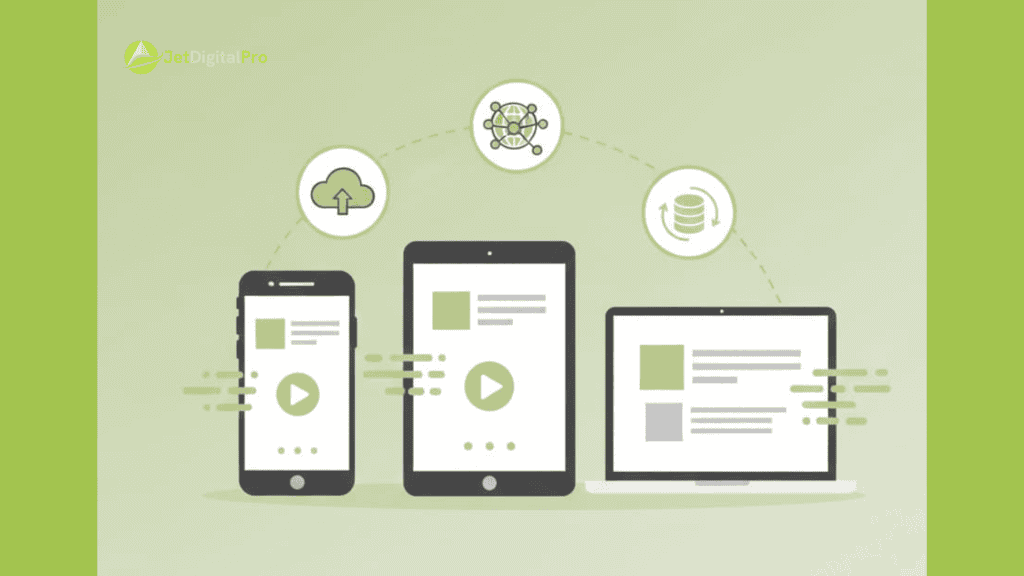
Once the delivery path is in place, optimization makes the experience feel instant instead of just “technically working.” A well-chosen format and a strong CDN can still be undercut by a heavy asset, like a huge image slowing down a product page.
That’s why we lean on automatic image compression, shrinking file sizes while keeping visuals sharp to the eye. For video, we use transcoding to produce several versions of the same content, tuned for different screens and bandwidths. A small phone on cellular doesn’t need a 4K stream, it needs a clean, quick 720p version that starts without hesitation.
Responsive design is standard, but how it’s executed still matters. HTML layouts should reflow gracefully on any display, but layout is only part of it. Tap targets need to be comfortable on touchscreens, navigation has to stay clear on smaller viewports, and text should be readable without awkward pinching or scrolling.
When mobile usability lags behind desktop, both search engines and users notice. A smooth mobile experience has become the floor, not the ceiling, for digital content.
All of this comes together most cleanly in a unified content platform. That’s the model we’ve built out for Jet Digital Pro and for our clients. Instead of juggling one system for articles, another for video hosting, a third for downloads, and separate tools for email, everything lives in a central content hub.
From there, the platform handles the logic: which format to use, which channel to send to, how to optimize for each device and connection. The result is less fragmented tooling, fewer silos, and a workflow where you focus on the message while the delivery engine quietly handles the rest.[2]
FAQ
How can I choose the best content delivery formats for my audience?
Choosing content delivery formats depends on how your audience prefers to read, watch, or listen. Think about whether they use mobile app content, responsive web formats, or downloadable file types. It also helps to check if they respond better to video streaming protocols, audio on-demand delivery, or PDF document delivery so you can match the format to their habits.
What service delivery methods help me reach people on different channels?
Service delivery methods vary, but most users need simple ways to get information across multichannel distribution channels. You can use an omnichannel content strategy, social media posts, email newsletter formats, or mobile push notifications. Each path supports channel-specific adaptations so people can access what they need in the way that feels easiest for them.
How do CDNs affect digital content distribution for everyday users?
A content delivery network moves files quickly by using global PoP distribution and edge server caching. Different CDN types use tools like a push CDN model, pull CDN approach, or hybrid CDN systems. These help lower delays for streaming content formats, static content caching, and dynamic content serving so users get low-latency content during busy times.
What should I know before sharing videos or files online?
Before you share files, check the streaming content formats and MP4 video files you plan to use. Some users need responsive HTML5 for smoother playback, while others prefer software download links for offline viewing. Think about infographic file formats, webinar recording delivery, and ebook distribution services to make sure everyone can open and enjoy your content.
How can I keep content consistent across many platforms?
You can keep consistency by using unified content platforms with automated publishing workflows. These tools help manage online forum threads, social media snippets, and blog article syndication from one place. API-driven architecture also supports seamless data flow, cross-channel consistency, and content silos elimination so your audience sees clear, steady messages everywhere.
Your Content, Delivered with Purpose
Content delivery is the silent partner to your best ideas. When it works, everything feels seamless, the video runs smoothly, pages load fast, and documents open instantly. When it fails, it becomes the only thing people notice.
By choosing the right formats and using a modern delivery approach, you remove friction and make complexity feel simple. Your content deserves to be experienced, not just seen. Ready to build a delivery strategy that performs? Contact JetDigitalPro
References
- https://www.hostinger.com/ca/tutorials/website-load-time-statistics
- https://seosandwitch.com/website-speed-statistics/
