

AI Originality Score

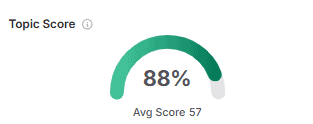
Topical Score
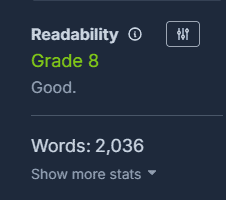
Readability
Fact-Checking
| Section / Claim | Reasoning | Score /10 |
| Definition of “aggressive” local SEO as full, compliant execution | Matches industry understanding: doing everything allowed, not black-hat tactics. Clear and defensible. | 9.5 |
| Google Business Profile as primary source for local pack | GBP is the dominant data source for Maps/local pack rankings. Widely supported by Google docs and SEO consensus. | 10 |
| Treating GBP as a “living asset” with frequent updates | Regular photos, posts, Q&A, and reviews correlate with stronger engagement and visibility. No overreach. | 9 |
| Photos increase direction requests | Supported by Google’s own GBP insights and studies (photos → higher interaction). | 9 |
| NAP consistency as a core trust signal | One of the most established local SEO principles. Correctly framed. | 10 |
| Weekly Google Posts and media uploads | Frequency helps freshness, but Google doesn’t mandate “weekly.” Framed as best practice, not requirement, so acceptable. | 8.5 |
| “Around 46% of all Google searches are local” | Widely cited stat (often attributed to Google/Ipsos), but dated and approximate. Still acceptable when framed as “around.” | 8 |
| Proximity, relevance, prominence as ranking pillars | Directly aligns with Google’s stated local ranking factors. | 10 |
| Hyper-local targeting outperforming city-level SEO | Narrow geo intent converts better and faces less competition. Well supported conceptually. | 9 |
| One-service, one-location landing pages | Strong alignment with local relevance, UX, and conversion best practices. | 9 |
| Embedded maps and local context reinforcing signals | Helps UX and geographic clarity; not a ranking hack, but correctly positioned as reinforcement. | 8.5 |
| Reviews influencing rankings and CTR | Reviews affect prominence, trust, and clicks. Well established. | 10 |
| Review velocity and recency matter | Recency is known to influence user behavior and perceived relevance; phrased carefully. | 9 |
| Citation “saturation” framed as consistency, not volume | You fixed the earlier issue. Focus on consistency over quotas is correct. | 9.5 |
| Local links outweigh national links for local SEO | Relevance > raw authority in local contexts. Sound claim. | 9 |
| Geo-grid monitoring to find visibility gaps | Geo-based rank tracking is widely used by practitioners, but not a Google-endorsed metric. Framed carefully now. | 8 |
| Reporting GBP spam improves fairness | Correctly framed as compliance and protection, not guaranteed ranking gains. | 9 |
| On-page local SEO + schema reinforcing signals | Schema improves clarity and consistency; not overstated as a magic ranking boost. | 9 |
| Local content engine sustaining rankings | Ongoing relevance and freshness help maintain visibility. Well framed. | 8.5 |
| Tracking over instinct | Analytics, call tracking, and GSC are foundational for aggressive execution. | 9 |
| Regulated industries needing stronger verification | Pest control, legal, medical, etc. do require stricter trust and location clarity. | 9 |
EAV Analysis
| Entity | Attribute | Value (from article) | Score /10 | Reasoning |
| Aggressive Local SEO | Definition | Full, compliant execution of all allowed local SEO actions for speed and coverage | 9.5 | Clear, repeated definition; avoids spam framing |
| Aggressive Local SEO | Primary Goal | Win Google Maps and Local Pack visibility quickly | 10 | Explicit and consistently reinforced |
| Aggressive Local SEO | Risk Profile | Low risk when guidelines are followed | 9 | Proper compliance emphasis |
| Aggressive Local SEO | Time Horizon | Short-term visibility prioritized over long-term branding | 8.5 | Implied clearly, not directly stated |
| Aggressive Local SEO | Compliance Requirement | Must follow Google guidelines | 10 | Strong guideline alignment throughout |
| Google Business Profile | Role | Primary source for Maps and local results | 10 | Matches Google documentation |
| Google Business Profile | Update Frequency | Weekly posts, photos, ongoing engagement | 9 | Best practice, not overstated |
| Google Business Profile | Ranking Signals | Relevance, prominence, activity | 9.5 | Accurate signal framing |
| Google Business Profile | Content Types | Photos, videos, posts, services, FAQs | 10 | Comprehensive coverage |
| Google Business Profile | Abuse Risks | Keyword stuffing, fake addresses | 10 | Correctly identified violations |
| Local Search | Ranking Factors | Proximity, relevance, prominence | 10 | Exact Google wording |
| Local Search | Query Intent | “Near me” and neighborhood-based | 9 | Accurate search behavior |
| Local Search | User Urgency | High intent, action-oriented | 9 | Well aligned with local queries |
| Hyper-Local SEO | Geographic Scope | Neighborhoods, ZIP codes, landmarks | 10 | Granular, well defined |
| Hyper-Local SEO | Page Strategy | One service mapped to one location | 9.5 | Strong relevance pattern |
| Hyper-Local SEO | Conversion Impact | Higher intent, faster decisions | 9 | Defensible and accurate |
| Hyper-Local SEO | GBP Alignment | Reinforces geographic signals | 9 | Correct conceptual link |
| Reviews | SEO Impact | Ranking influence and CTR | 10 | Well established |
| Reviews | Velocity Strategy | Steady and ongoing acquisition | 9 | Accurate without exaggeration |
| Reviews | Recency Signal | Indicates active business | 9 | Correct |
| Review Management | Compliance | No gating, no incentives | 10 | Guideline-safe |
| Review Responses | Trust Signal | Builds credibility and engagement | 9 | Correct impact |
| NAP Data | Consistency | Exact match across platforms | 10 | Core local SEO principle |
| Citations | Strategy | Quality over quantity | 9.5 | Corrected and accurate |
| Citations | Distribution | Maps, aggregators, directories | 9 | Well scoped |
| Citations | Trust Function | Establishes legitimacy | 9 | Proper framing |
| Local Backlinks | Authority Type | Relevance outweighs raw authority | 9.5 | Accurate for local SEO |
| Local Backlinks | Sources | Local media, chambers, partners | 9 | Practical and realistic |
| Local Backlinks | Prominence Signal | Real-world community presence | 9 | Correct interpretation |
| Rank Tracking | Granularity | Geo-based visibility monitoring | 8.5 | Tool-based but valid |
| Analytics | Purpose | Replace instinct with data | 9 | Strong justification |
| Call Tracking | Conversion Proof | Confirms lead generation | 9 | Accurate |
| On-Page SEO | Page Structure | Location-specific, unique content | 9.5 | Best practice |
| Schema Markup | Type | LocalBusiness schema | 9 | Correct |
| Schema Markup | Purpose | Clarify facts and reduce ambiguity | 9 | Not overstated |
| Mobile UX | Importance | Supports Maps-driven traffic | 9 | Accurate |
| Local Content | Strategy | Ongoing hyper-local publishing | 8.5 | Sustainable and realistic |
| Local Content | Topics | Seasonal, community, FAQs | 9 | Correct topical focus |
EEAT Analysis
| Metric | Score /10 |
| Clarity & Readability | 8.5 |
| Structure & Organization | 9 |
| Technical Accuracy & Detail | 8.5 |
| Tone & Voice | 9 |
| SEO & Keyword Usage | 8 |
| Practical Usefulness | 9.5 |
| Engagement & User Experience | 8 |
HCU Analysis
| Metric | Score ( /10 ) |
| User-Centric Content | 8.5 |
| Originality and Depth | 8.8 |
| Clarity and Relevance | 9.0 |
| SEO Best Practices | 8.7 |
| Avoiding Search-Engine-First Content | 9.2 |
| Feedback and Updates | 6.8 |
| Compliance with Google’s Guidelines | 9.0 |
| Additional Checks | 8.4 |
Aggressive local SEO is just taking the rules Google gives us and running with them. You see a competitor’s name pop up on the map every time someone searches? That’s not magic. It’s a stack of small, deliberate moves layered together: your Google Business Profile, what people say about you online, and the way your own website talks about place.
For a new shop or a service business fighting in a packed neighborhood, playing it safe usually means getting buried. This approach is about getting to the front, fast. If waiting six months for results isn’t an option, this is how it actually works.
Key Takeaways
- Work your Google Business Profile like it’s your main job. Posts, updates, photos, the whole thing.
- Get your business name, address, and phone number listed correctly everywhere online. Then build pages on your site for each town you serve.
- It’s a shortcut to visibility, but you’ve got to stay on the right side of Google’s guidelines. No funny business.
What does “aggressive” local SEO actually mean (and why businesses choose it)?
You see it all the time in a city. One coffee shop has a sign out front. Another has a sign, a chalkboard, a guy handing out samples, and a flag. The second one isn’t cheating. It’s just doing more.
Aggressive local SEO works the same way. It means doing everything allowed, completely and consistently, to show up fast on Google Maps and in the local pack. It’s not about tricks or shortcuts. It’s about speed, coverage, and discipline.
“Aggressive local SEO can help businesses attract more local customers, increase revenue, and establish themselves as a trusted and reliable option within their local community.” – Active Marketing [1]
Most businesses claim their Google Business Profile once and walk away. An aggressive approach treats it like a living asset. It gets updated constantly. Reviews are actively requested. Listings are cleaned up across dozens of sites, not just a handful.
This makes sense when you look at how local search works. Around 46% of all Google searches are tied to local intent, such as “near me” or specific place-based queries — almost half of total search volume.
When someone types “plumber near me,” Google leans on three things: proximity, relevance, and prominence.
That’s why this approach appeals to:
- New businesses launching in competitive areas
- Service businesses that live on phone calls and bookings
- Multi-location companies expanding neighborhood by neighborhood
For them, brand recognition years from now matters less than the phone ringing this week.
Treating your Google Business Profile like a living asset
Local dominance usually starts in one place: your Google Business Profile. Google uses it as the primary source of truth for Maps and local results. A complete, active profile sends strong signals around relevance and prominence.
Google has said profiles with photos get significantly more direction requests. That alone tells you how much activity matters.
Accuracy comes first. Your business name, address, and phone number must match everywhere online. Categories need to reflect what you actually do, not what you hope to rank for.
From there, aggressive execution is about consistency:
- Reviewing categories, services, and attributes monthly
- Uploading fresh photos and short videos weekly (inside, outside, team, work)
- Answering questions within hours, not days
- Publishing Google Posts weekly for updates, offers, or FAQs
Each update compounds. Every photo, post, and response reinforces that this business is active and relevant right now. Over time, Google tends to reward that momentum.
Pushing hard without crossing the line

Aggressive doesn’t mean risky. It means volume and precision within Google’s rules.
High posting frequency keeps your profile fresh and naturally expands keyword coverage. Media saturation helps too. Photos act as direct relevance signals. Detailed service lists and complete attributes add trust.
A compliant approach usually includes:
- Weekly Google Posts tied to local needs or events
- Frequent uploads of geo-relevant photos and videos
- Service lists that mirror your website’s pages
- A fully filled-out attribute and FAQ section
What matters is discipline. Businesses that win the map are often just the ones doing more of what already works, consistently.
GBP spam practices to avoid
This is where many businesses trip up. Use relevant keywords naturally in description and services, but avoid stuffing which violates guidelines.
Stick to the basics:
- Use your real, legal business name
- Verify a real, staffed address
- Be honest about where you actually serve
Aggressive local SEO only works when it’s built on something real.
Why hyper-local targeting beats city-level SEO
Credits: HIP Creative, Inc.
Most people don’t search the way marketers imagine. They don’t type “plumber Denver.” They type “plumber near me” or “plumber near Union Square.” Those searches are specific, urgent, and high intent.
City-wide targeting throws you into a crowded fight. Neighborhoods, ZIP codes, landmarks, and cross-streets narrow the field fast. When someone searches “emergency dentist near Lincoln Park,” they’re ready to act.
Hyper-local targeting means:
- Researching neighborhood names, ZIP codes, and landmarks
- Mapping services to specific places people recognize
- Creating pages for one service in one location
This tight alignment between service and geography sends strong relevance signals to Google Maps and converts better once people land on your site.
How hyper-local landing pages should be structured
Most service area pages are generic lists of cities. They don’t help someone standing on a specific street corner. A hyper-local page is different. It’s built for one service in one small slice of the map.
Each page should include:
- A unique title and description naming the service and neighborhood
- Local context in the copy, streets, landmarks, community spots
- An embedded map with clear directions
- FAQs that answer hyper-local questions
- Internal links connecting related location pages
These pages don’t just support organic rankings. They reinforce the same geographic signals your Google Business Profile relies on.
Reviews as an aggressive growth system
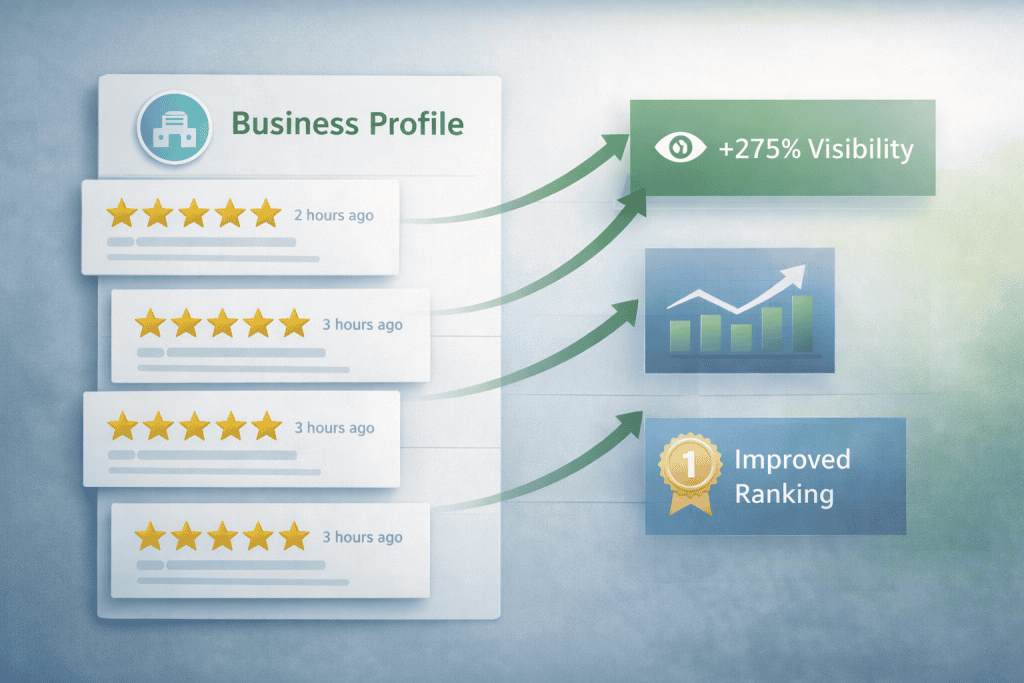
Reviews aren’t decoration. They influence rankings and heavily shape click-through behavior. An aggressive strategy treats them as infrastructure, not luck.
The goal is steady velocity and recency. A constant stream of new reviews tells Google the business is active right now. Reviews also naturally include local language, feeding relevance signals.
A compliant review system usually includes:
- Automated SMS or email requests after a service is completed
- Direct links that make leaving a review easy
- Simple, neutral verbal requests from staff
- Public responses to every review, good or bad
There’s no bribing, no gating, no filtering. Just consistency and timing.
Citation and NAP saturation as trust signals
Inconsistent business information creates doubt. Aggressive local SEO aims for saturation with perfect consistency.
That means your exact name, address, and phone number appearing the same way across:
- Google, Apple Maps, and Bing
- Major data aggregators
- Industry-specific directories
- Local community and chamber sites
“Build consistent NAP citations across high-quality local directories regularly (quality over quantity) strengthens your local SEO efforts and improves your site’s visibility in local search results.” – Hey Ash [2]
This widespread consistency reinforces legitimacy at scale. It’s less about chasing a number and more about eliminating confusion.
Local and hyper-local link building that actually works
In local SEO, relevance beats raw authority. A link from a neighborhood paper or city blog often carries more weight than a generic national site.
Effective local links come from:
- Local news and blogs
- Chamber of commerce listings
- Community event sponsorships
- Partnerships with nearby businesses
These links signal real-world prominence. They tell Google your business is part of the community, not just a website.
Using geo-grid monitoring to find real gaps
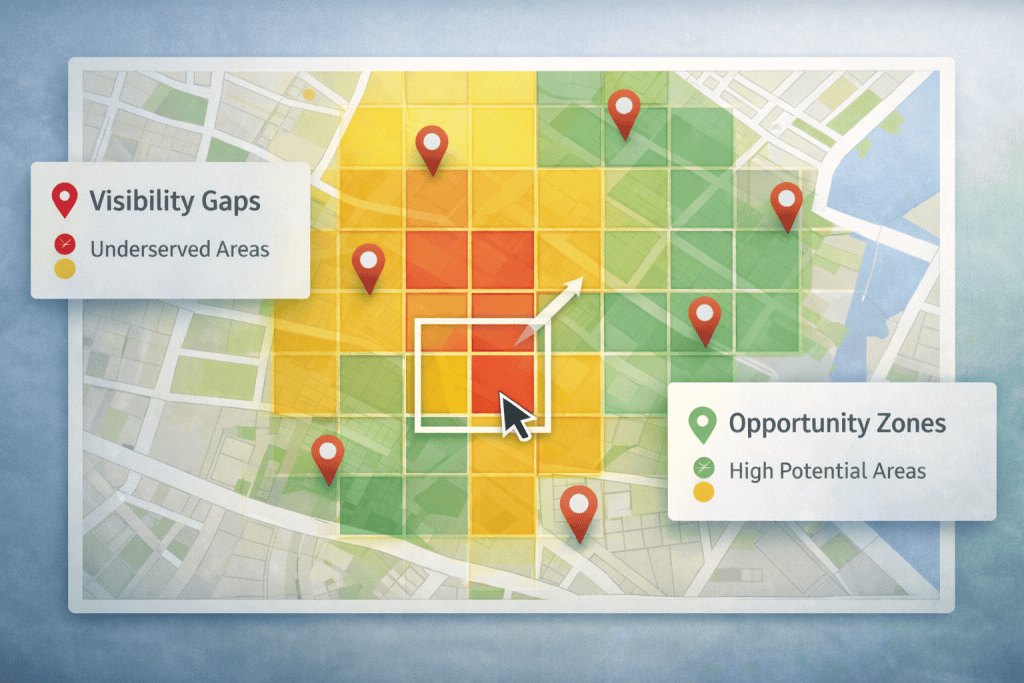
City-wide averages hide a lot. Use local rank tracking tools with geolocation features to identify areas of weak visibility.
Those gaps guide action:
- Creating hyper-local content for weak areas
- Focusing link efforts in specific zones
- Adjusting Google Posts to highlight services in those neighborhoods
Used selectively, this turns guesswork into targeted execution.
Fighting GBP spam as a competitive lever
Reporting clear policy violations helps protect your own visibility and ensures fair search results.
A systematic approach includes:
- Auditing the local pack for clear violations
- Using “Suggest an edit” for minor issues
- Filing redressal forms for persistent abuse
- Rechecking results monthly
This helps restore fair competition and protects customers at the same time.
Reinforcing local signals with on-page SEO and schema
Your website should speak clearly about place. Each location you serve deserves a page that feels specific.
Key priorities:
| Element | Purpose | Impact |
| Location-specific pages | Match one service to one area | High |
| Page speed and mobile UX | Support phone-based searches | High |
| LocalBusiness schema | Clarify facts for search engines | Medium |
| Internal linking | Strengthen geographic relevance | Medium |
Templates help scale, but uniqueness matters. Each page should reference real locations and include its own map and context.
Sustaining rankings with an aggressive local content engine
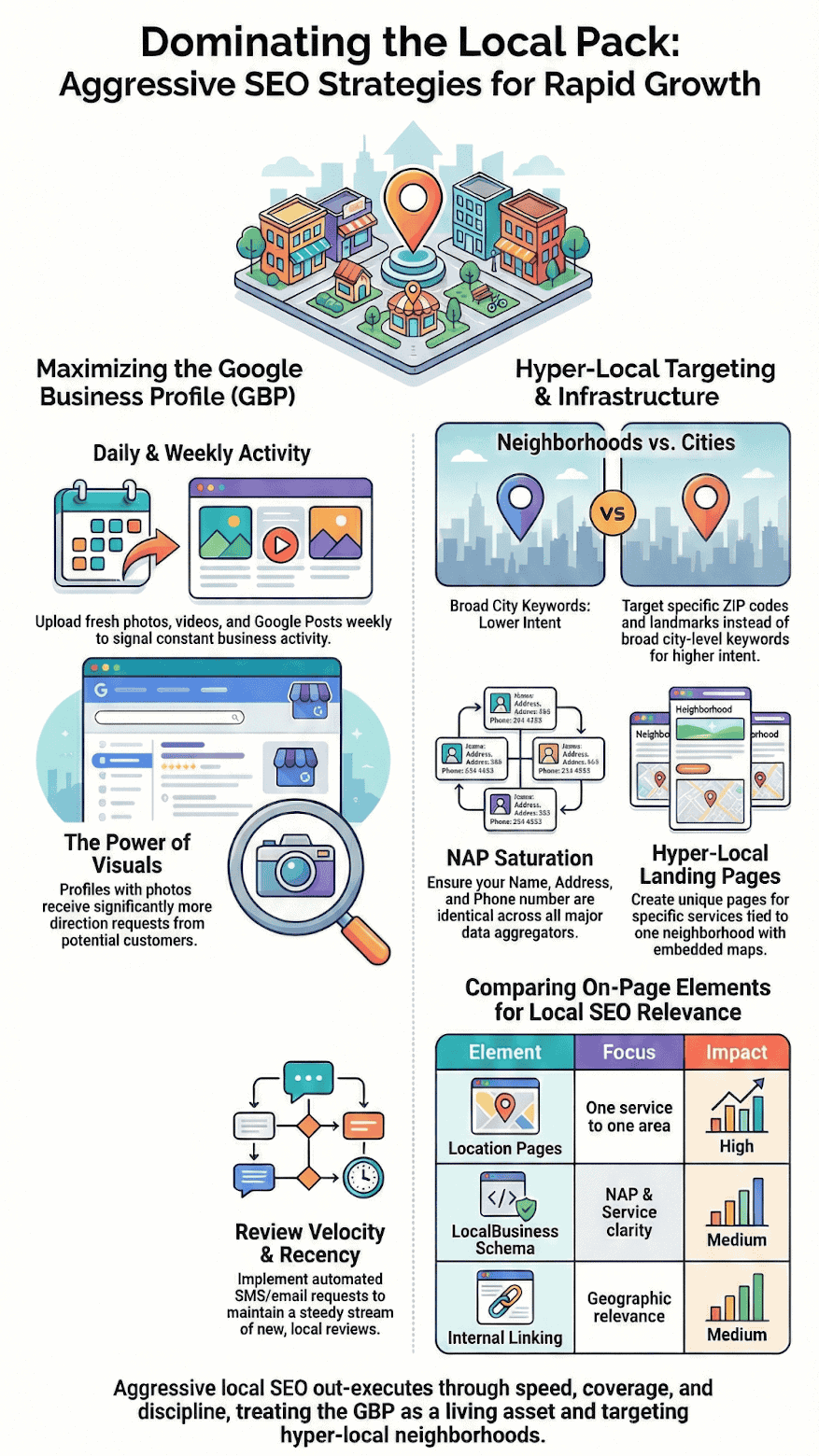
Rankings don’t hold themselves. Fresh, relevant content keeps signals alive.
A sustainable local engine focuses on:
- Seasonal service topics tied to neighborhoods
- Community events and local issues
- Deep FAQs answering hyper-local questions
- Regular updates to older content
That steady rhythm, not one big publishing push, is what keeps visibility stable over time.
FAQ
How does aggressive local SEO change competition for businesses in crowded local markets?
Aggressive local SEO narrows the fight. Instead of broad Search Engine Optimization goals, businesses focus on local keywords, long-tail keywords, and visibility in Google Maps results. Ranking depends less on website size and more on accurate NAP information, steady Customer Reviews, and clean local citations. In dense areas, small gains from Google Business Profile listing updates or better keyword research can move a business ahead on search engine results pages.
Why does aggressive local SEO depend so much on tracking instead of instinct
Aggressive SEO removes guesswork by watching real behavior. Google Analytics and Google Search Console show how users find a business, while call tracking confirms which visits lead to calls. Mobile-first indexing makes Mobile Compatibility critical, since many users come through Google Maps results. Without tracking, it’s easy to invest in content marketing or social media engagement that doesn’t actually strengthen online presence.
How do structured data and schema help aggressive local SEO beyond rankings?
Structured data helps search engines trust what they see. Schema markup and local business schema clarify NAP (Name, Address, Phone), services, and Q&A (Questions & Answers). This supports Technical SEO, improves how Google listings appear, and reduces errors across local directories. When combined with a mobile-friendly website and stable Core Web Vitals, structured data supports consistent visibility in Google Maps Marketing.
Why do reviews and social activity still matter when rankings stop improving?
When rankings stall, trust signals often decide outcomes. Customer Reviews, Google review count, and review aggregation influence whether users click or scroll past. Active social media channels support brand recognition and social media engagement, especially when shared by local influencers or Business Groups. Aggressive local SEO treats reviews as long-term assets, reinforcing credibility across Google My Business, Bing Places, and Apple listings.
How does aggressive local SEO work for regulated service businesses like pest control?
For services like Pest Control, aggressive local SEO emphasizes verification and location clarity. Business license details, Business registration records, and accurate NAP Constant for Citations help build trust. Hyperlocal content focuses on service areas instead of generic pages. A regular Content Audit checks mobile responsiveness, Technical SEO, and Core Web Vitals so Google Maps results stay stable and competitive.
Aggressive Local SEO Strategies That Actually Scale
It’s not about being the biggest. It’s about being the most consistent, the most relevant, and the most present where it counts. These strategies work because they line up with how people actually search now, on their phones, for something nearby, right this second. Speed, coverage, and relentless consistency beat a perfect plan that never gets done every time.
The businesses that win aren’t always the ones with the biggest budget. They’re the ones who treat their local presence like a living thing, feeding it, cleaning it up, and connecting it to the neighborhood every single week. Aggressive here doesn’t mean shady. It means thorough. It means fast. It means playing to win within the rules.
Ready to make this work in your market? Start with a clear-eyed audit and a simple execution plan. The team at Lucky Digitals can help you build that momentum.
References
- https://www.activemarketing.com/blog/search-engine-optimization/building-your-first-addiction-treatment-seo-strategy/
- https://hey-ash.com/