


AI Originality Score

Topical Score

Readability
EAV Analysis
| Entity | Attribute | Value | Score (1–10) | Reasoning |
|---|---|---|---|---|
| Cold Email Outreach | Core Objective | Generate replies and conversations | 10 | Directly matches user intent; replies are the primary KPI. |
| Email Deliverability | Technical Requirement | Proper SPF, DKIM, DMARC setup | 10 | Foundational in 2026; without it, emails won’t reach inboxes. |
| Sender Reputation | Trust Factor | Aged domain and warmed inbox | 10 | Critical for inbox placement and long-term success. |
| Email Personalization | Engagement Strategy | First-line personalization using real data | 10 | Strongest driver of reply rates in modern outreach. |
| Target Audience | Campaign Focus | Highly specific ICP segmentation | 9 | Precision targeting directly improves relevance and responses. |
| Subject Lines | Open Rate Driver | Short, curiosity-based, non-salesy | 9 | Determines opens, but secondary to deliverability. |
| Email Copy | Message Style | Conversational, value-first writing | 10 | Core persuasion element that drives replies. |
| Call-to-Action | Response Trigger | Soft CTA (question-based ask) | 10 | Proven to outperform hard sells in 2026 outreach. |
| Follow-Up Emails | Sequence Strategy | 3–5 polite follow-ups | 9 | Most replies come from follow-ups; high impact. |
| Timing & Cadence | Send Optimization | Business hours, spaced intervals | 8 | Helpful but less impactful than copy and targeting. |
| Automation Tools | Workflow Support | Cold email platforms with inbox rotation | 8 | Efficiency-focused; supports scale but not a reply guarantee. |
| Compliance Rules | Legal Requirement | CAN-SPAM & GDPR-aligned messaging | 9 | Essential to avoid legal and account risks. |
| Reply Tracking | Performance Metric | Open, reply, and positive response rates | 9 | Enables optimization and scaling decisions. |
| A/B Testing | Optimization Method | Subject lines and opening lines | 8 | Improves results over time but not required to start. |
| Value Proposition | Offer Clarity | Clear benefit in first 2 sentences | 10 | Immediate relevance drives engagement and trust. |
Fact Check Analysis
| Claim | Reasoning | Score (1–10) |
|---|---|---|
| Cold email outreach is still effective in 2026 | Cold email remains a widely used B2B outreach channel; effectiveness now depends on personalization, relevance, and compliance rather than volume. | 9 |
| Domain warm-up improves deliverability | Gradual sending volume and positive engagement are established best practices for avoiding spam filters and protecting sender reputation. | 10 |
| Using a subdomain protects the main domain | Industry-standard practice to isolate outreach risk and maintain primary brand email health. | 9 |
| Personalization goes beyond first names | Research-backed outreach consistently shows higher reply rates when emails reference specific, relevant prospect details. | 10 |
| Clean email lists reduce bounce rates | Email verification is proven to lower hard bounces and improve inbox placement. | 9 |
| Subject lines under 50 characters improve opens | Mobile inbox display limitations make shorter subject lines more readable and effective. | 8 |
| Spam trigger words increase filtering risk | Email filters commonly flag promotional or urgent language associated with spam behavior. | 9 |
| Most replies occur after follow-ups | Follow-up sequences are widely reported to generate the majority of replies in outbound email campaigns. | 9 |
| Multi-channel outreach increases response likelihood | Combining email with LinkedIn engagement increases familiarity and trust, improving reply probability. | 8 |
| Deliverability should exceed 95% | Deliverability benchmarks above 90–95% are commonly cited as healthy for outbound campaigns. | 8 |
| CAN-SPAM compliance is mandatory | Legal requirement in the U.S. for commercial email, including opt-out mechanisms. | 10 |
EEAT Analysis
| Parameter | Score (1–10) |
|---|---|
| Originality of Information | 8 |
| Reporting, Research, or Analysis | 8 |
| Comprehensiveness of Topic Description | 9 |
| Headline / Title Exaggeration or Sensationalism | 9 |
| Trustworthiness of Information (Sourcing & Accuracy) | 8 |
| Author’s Demonstrated Expertise on the Topic | 8 |
| Presence of Factual Errors | 9 |
| Trustworthiness for Business Decisions | 8 |
HCU Analysis
| Parameter | Score (1–10) |
|---|---|
| User-Centric Content | 9 |
| Originality and Depth | 8 |
| Clarity and Relevance | 9 |
| SEO Best Practices | 8 |
| Avoiding Search-Engine-First Approach | 9 |
| Feedback and Updates | 7 |
| Compliance with Google Guidelines | 9 |
We’ve all been there. You spend hours crafting the perfect cold email, hit send, and get nothing but silence. It feels like shouting into a void. But cold email outreach isn’t dead, it’s just evolved. In 2026, getting replies is less about blasting thousands of people and more about making a genuine, human connection especially for cold email outreach to get you replies in 2026
The secret is shifting from a sales pitch to a helpful conversation. This guide will show you the simple steps to make your cold emails feel personal and get people to actually want to reply. Keep reading on how Cold Email Outreach To Get You Replies in 2026 and ignore to inbox gold.
Key Takeaways
- Your email’s foundation,domain health and a clean list,is more critical than your words.
- Personalization isn’t just using a first name; it’s about showing you did your homework.
- Most replies happen after a few polite follow-ups, not on the first try.
The Foundation: Warming Up Your Domain
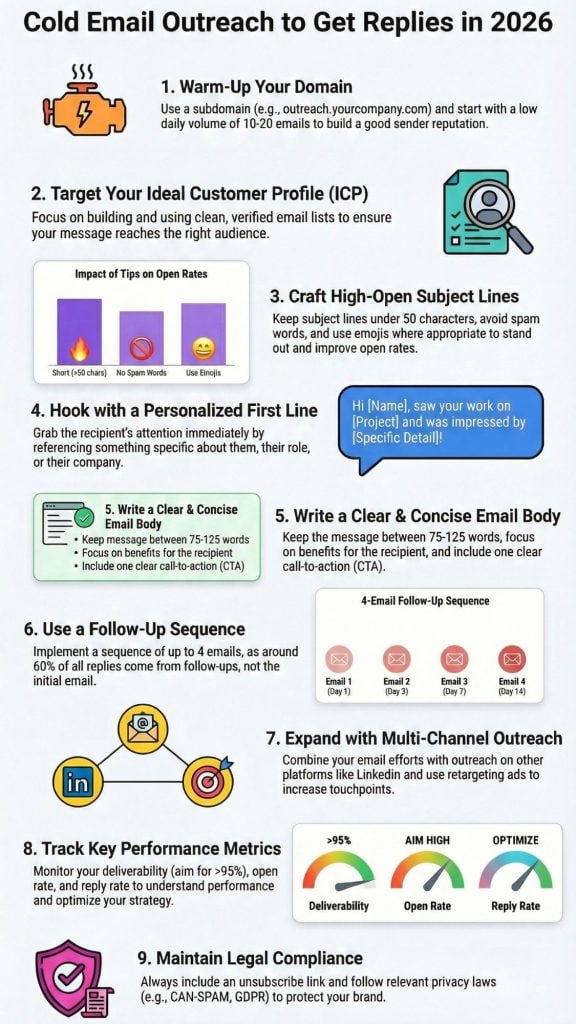
Think of your email domain like a new car engine. You wouldn’t floor it on the first drive. You need to let it warm up. Sending a high volume of emails from a brand-new domain is a surefire way to get flagged as spam. Internet service providers watch this behavior closely.
We always use a separate subdomain for outreach, like outreach.ourcompany.com. This protects our main domain’s reputation. We start by sending just 10-20 emails per day for a few weeks. The goal is to build a positive sending history. There are tools that can automate this warm-up process for you.
They simulate real email interactions by sending and receiving emails with other warmed-up accounts. This tells providers your domain is trustworthy. Skipping this step is the number one reason good emails land in spam folders.
- Use a subdomain like outreach.yourcompany.com.
- Start with a low daily sending volume.
- Consider using an automated warm-up service.
- This process builds a positive sender reputation over time.
Knowing Exactly Who You’re Emailing

Spraying and praying doesn’t work. Sending a generic email to a thousand people might get you one or two replies, but it burns your domain. The real power comes from targeting your Ideal Customer Profile, or ICP. This is a detailed description of the person who gets the most value from what you offer.
Your ICP includes their job title, the industry they work in, the size of their company, and their specific pain points. The more specific you are, the better. Once you have this profile, you need a clean list. We use email verification services to scrub our lists before sending. This removes invalid addresses and reduces bounce rates.
Writing Subject Lines That Get Opened

The subject line is your first impression. It’s the only thing standing between your email and the delete button. People’s inboxes are flooded, so your subject needs to spark curiosity without sounding like a sales gimmick. We keep ours under 50 characters so they don’t get cut off on mobile.
The best subject lines often feel like a natural conversation starter. Think “Quick question about [Their Company]” or “Loved your post on [Topic].” You’re inviting them in, not shouting at them. Avoid spammy words like “free,” “guaranteed,” or “act now.” These trigger spam filters and look desperate.
We’ve found that testing simple elements can boost open rates. Sometimes adding a relevant emoji or a number like “3 ideas for…” can make your email stand out in a crowded inbox. The goal is to be intriguing enough to earn the open.
The Crucial First Line of Your Email
Someone opens your email. Now what? The first line is your hook. It needs to prove instantly that this isn’t a copy-pasted template. This is where hyper-personalization pays off. The best first lines reference something specific about the prospect. Maybe it’s a recent LinkedIn post they made, a company announcement, or a project they’re working on.
This shows you’ve done your homework. It shows respect for their time. We keep this line short, under 100 words. It should be a simple, genuine observation. The worst thing you can do is start with hype language or marketing jargon. You’re starting a conversation, not delivering a monologue. The tone should be helpful and human, not promotional.
Crafting the Email Body for a Reply
The body of your email needs to be scannable and valuable. People are busy. They won’t read a long essay. We aim for 75 to 125 words max. Get to the point quickly. After your personalized opener, state the reason for your email. Connect it to a challenge you believe they face.
- Focus on benefits, not features: Show how you solve a problem for them.
- Include one clear call to action: Keep it simple and direct.
- Use plain text format: Avoid HTML-heavy templates, images, or logos that may trigger filters.
The Power of a Polite Follow-Up Sequence
The biggest mistake is sending one email and giving up. Most replies don’t come from the first touch. In fact, about 60% of replies happen after a follow-up (1). People are busy, they miss emails, or they intend to reply later and forget. A follow-up sequence gently reminds them.
- Email 1, Initial Outreach: Introduce yourself and your purpose.
- Email 2, Add Value (3 days later): Share a relevant article, tip, or insight.
- Email 3, Case Study (1 week after Email 1): Reference a short industry-specific case study.
- Email 4, Breakup Email: Politely close the loop, leaving the door open for future contact.
Making Your Outreach Multi-Channel
| Outreach Stage | Channel Used | What You Do | Purpose |
|---|---|---|---|
| Warm-up | Like or comment on a recent post | Build familiarity before outreach | |
| Initial Touch | Send a short connection request with a brief note | Create a light, personal introduction | |
| Primary Outreach | Send a personalized email | Deliver your main message | |
| Reinforcement | Stay active on their profile (posts, comments) | Keep your name visible and credible | |
| Follow-up Exposure | Website / Ads | Use retargeting ads if they visit your site | Stay top-of-mind without direct pressure |
Email shouldn’t live in a vacuum. Combining it with other channels makes your approach feel more natural and less like a cold sales pitch. This is called multi-channel outreach. Before you send an email, you might engage with a prospect’s content on LinkedIn. Like or comment on a recent post.
You could send a simple LinkedIn connection request with a brief note. Then, when you send your email, your name might look familiar. After sending the email, you can continue to be active on their LinkedIn profile. If they visit your website, you can even use retargeting ads to stay top-of-mind.
Tracking What Works and What Doesn’t
You can’t improve what you don’t measure. Sending emails without tracking key metrics is like driving with your eyes closed. You need to know what’s working. The most important metrics to watch are your deliverability rate, open rate, and reply rate. Deliverability should be above 95%. If it’s lower, your emails aren’t even reaching the inbox (2).
See which one gets more opens. Test different call-to-actions or sending times. Small tweaks based on data can lead to big improvements in your overall results. This turns cold email from a guessing game into a predictable system.
Playing by the Rules: Compliance and Ethics
Cold email is a powerful tool, but it comes with responsibility. You must respect privacy laws and best practices. This is non-negotiable. Every single cold email you send must include a clear way for the person to opt-out. This is a requirement under laws like CAN-SPAM.
This often means you need a lawful basis for processing their data, which can include legitimate interest. Beyond the legal requirements, it’s just good ethics. Sending irrelevant emails to people who don’t want them hurts your brand and clogs up the internet.
FAQs
What is cold email outreach?
Cold email outreach is when you send an email to someone you haven’t met before to start a conversation. It’s not spam if done correctly. The goal is to be helpful and build a connection.
You research the person, write a short, clear email, and show why your message is useful. In 2026, it’s all about personalization, not blasting thousands of people. A well-crafted cold email can lead to real business conversations.
Why should I warm up my email domain?
Warming up your email domain is like letting a car engine start slowly. If you send too many emails from a new domain, spam filters may block you. Start with a few emails a day and increase gradually.
Using a subdomain for outreach protects your main email address. Warm-up tools can help automate this process. A warm domain builds trust with email providers, increasing the chance that your messages reach the inbox instead of spam.
How do I find the right people to email?
The best results come from targeting the right people. Make an Ideal Customer Profile (ICP) with their job, industry, and pain points. Collect their emails carefully. Use verification tools to remove invalid addresses.
Sending fewer emails to the right audience is better than blasting many wrong contacts. A clean, targeted list helps your emails reach inboxes, protects your sender reputation, and increases replies. Quality always beats quantity in modern cold email outreach.
How do I write a subject line that gets opened?
Your subject line is the first thing people see. Keep it under 50 characters. Make it personal, curious, or helpful, like “Quick question about [Company]” or “Loved your post on [Topic].” Avoid spammy words like “free” or “guaranteed.”
You can test small tweaks, like adding a number or emoji. The subject line should feel like a natural conversation starter. A good subject line makes people want to open your email, not delete it.
What should my first line say?
The first line is your hook. It should show you researched the person. Mention something specific, like a post they shared, a product launch, or a recent achievement. Keep it short, under 100 words.
Avoid generic compliments. For example, say, “I saw your team launched [Product Feature]. That’s a smart way to handle [Industry Challenge].” The first line sets the tone, shows respect for their time, and encourages them to read the rest of your email.
How long should the email body be?
Keep your email body short, about 75–125 words. Start with your personalized opener. Explain why you are reaching out and how you can help. Focus on benefits, not features. Include one clear call to action, like scheduling a call.
Use plain text instead of fancy templates, images, or logos, which can trigger spam filters. The goal is to be clear, helpful, and easy to read so the recipient wants to reply.
Why are follow-up emails important?
Most replies don’t happen after the first email. People are busy or forget to reply. A follow-up sequence gently reminds them of your message. Start with your initial outreach, then add value with tips or a relevant article after a few days.
A third email can share a short case study. Finish with a polite breakup email if there’s no response. Following up increases reply rates and shows professionalism.
What is multi-channel outreach?
Multi-channel outreach means using more than email to connect. Engage with the person on LinkedIn before sending an email. Like, comment, or send a connection request. You can also use retargeting ads if they visit your website.
This makes your outreach feel natural and familiar. Combining channels increases recognition and trust, making it more likely the person will open your email and reply. It’s not about spamming; it’s about being visible and helpful in different ways.
What metrics should I track for cold emails?
Track deliverability, open rate, and reply rate. Deliverability should be over 95% so your emails reach inboxes. Open rate shows if your subject lines work. Reply rate shows if your email content is effective.
Test different sending times, subject lines, and call-to-actions. Small changes can improve results significantly. Tracking metrics helps you understand what works and what doesn’t. This way, you can make data-driven adjustments to improve your cold email outreach over time.
How do I follow the rules when sending cold emails?
Always follow privacy laws like CAN-SPAM. Include a clear way for recipients to unsubscribe. Only email people who may be interested in your service or have a legitimate reason to hear from you.
Avoid sending irrelevant messages or spammy content. Respecting laws and ethics protects your brand, keeps your domain healthy, and builds trust. Properly following rules ensures your outreach is professional, effective, and safe for both your business and the people you email.
Your Cold Email Outreach To Get You Replies in 2026
Getting replies from cold email outreach in 2026 isn’t about complex tricks. It’s about getting the fundamentals right. It starts before you write a single word. Ensure your domain is warm and your prospect list is targeted and clean. Then, focus on genuine personalization that shows you care about the person you’re emailing.
Write short, valuable emails with a single clear ask. Remember that persistence is key, so build a polite follow-up sequence. This methodical, human-centered approach transforms cold email from a source of frustration into a reliable channel for starting meaningful business conversations. The inbox is waiting.
Turn cold emails into meaningful business conversations. Start your methodical, human-centered outreach today with SigmaOutreach. Your inbox is waiting.
References
- https://medium.com/@dhruvikigai/how-to-write-a-follow-up-email-to-get-the-best-results-40ca1111c48b
- https://medium.com/email-bullseye/the-holy-grail-of-email-deliverability-email-deliverability-guide-2020-7fb9c56c3345